Greek Yogurt vs Plain Yogurt: How I Bought the Wrong Tub
Greek yogurt is strained and has about twice the protein of plain yogurt. Here is how I mixed them up at the store, and three label checks that tell them apart.
Greek yogurt and plain yogurt are different products. Greek yogurt is yogurt that has been strained, which makes it thicker and gives it about twice the protein of plain yogurt in the same weight. I found this out after buying the wrong tub.
The tub I thought was Greek yogurt
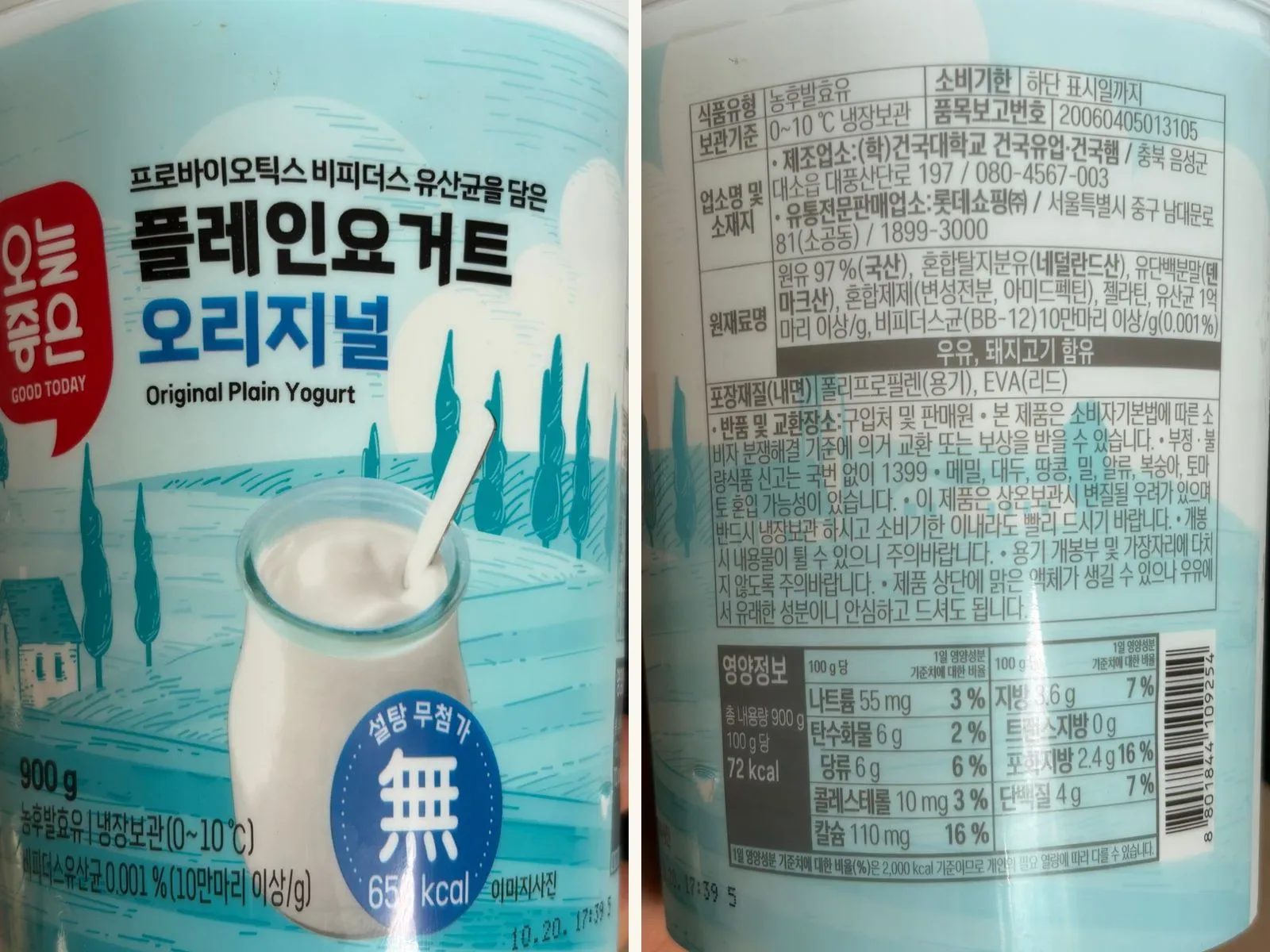
I bought a 900 g tub at a supermarket in Korea, believing it was Greek yogurt. The front carries a "no sugar added" badge, and I took it home without reading further.
Later I photographed the label for a recipe post and looked at it closely. The name on the front reads "plain yogurt". The nutrition label lists 4 g of protein per 100 g. It was plain yogurt, not Greek yogurt.
Greek yogurt vs plain yogurt at a glance
| Plain yogurt | Greek yogurt | |
|---|---|---|
| How it is made | Milk is cultured and left as it is | Milk is cultured, then strained to remove whey |
| Texture | Spoonable, looser | Thick, holds its shape |
| Protein per 100 g | About 3.5 g | About 9 g |
| Calories per 100 g | About 61 | About 97 |
The protein and calorie figures are for plain whole-milk yogurt and plain whole-milk Greek yogurt in USDA FoodData Central. Brands vary, so the label on your own tub is the number to trust.
My Korean tub sits where plain yogurt should: 4 g of protein and 72 calories per 100 g.
Why a thick yogurt is not always Greek
A thick yogurt can look like Greek yogurt in the tub. But a yogurt can be thick for two different reasons.
Greek yogurt is thick because liquid has been taken out. Straining removes whey, and what stays behind is denser.
Other yogurts are thick because something has been added. The ingredient list on my tub includes gelatin, modified starch and pectin. Those ingredients set the yogurt firm without removing anything, so the protein stays at the level of plain yogurt.
Three label checks that tell them apart
- Read the product name, not the claims. "No sugar added" and "original" describe the flavor. The product name is the line that says plain yogurt or Greek yogurt.
- Look at protein per 100 g. Around 3 to 4 g points to plain yogurt. Around 8 to 10 g points to Greek yogurt.
- Scan the ingredient list. Milk and cultures alone, with high protein, usually means the yogurt was strained. Gelatin, starch or pectin means the thickness comes from added ingredients.
The second check is the fastest one in the store. It takes a few seconds and it does not depend on the wording on the front.
What the word Greek means on a US label
In the United States, the word is less protected than you might expect. The Food and Drug Administration has a standard of identity for yogurt, but no separate standard for Greek yogurt or Greek-style yogurt.
In January 2025 the FDA published a request for information in the Federal Register about products sold as high-protein yogurt, Greek yogurt and Greek-style yogurt. Until a standard exists, the nutrition label tells you more than the name does.
Which one to use
For a dip that should stand up on a spoon, Greek yogurt is the better fit. For a looser sauce or dressing, plain yogurt works well.
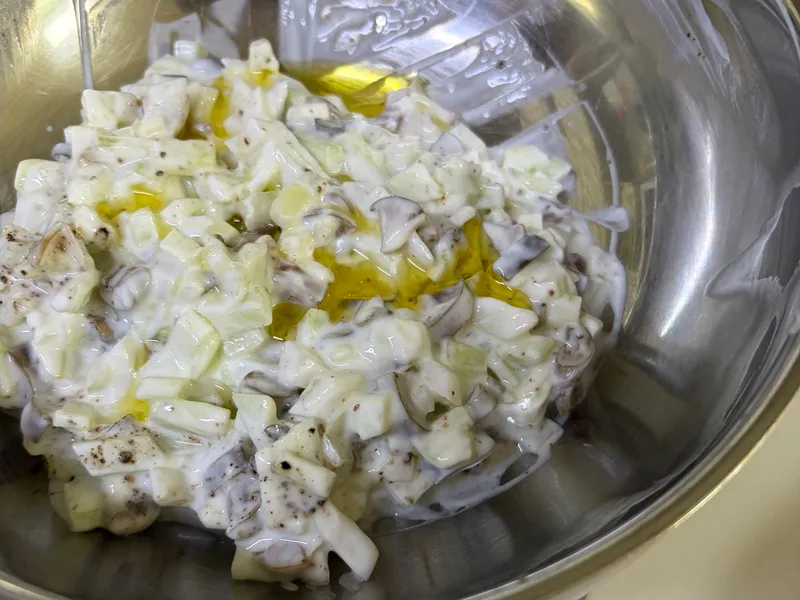
I made my Korean oiji tzatziki with this plain yogurt. Plain yogurt gives a looser dip than strained yogurt would, and the recipe says plain yogurt, because that is what is in the bowl.
Questions
Is Greek yogurt the same as plain yogurt?
No. Plain yogurt is yogurt with no flavoring. Greek yogurt is yogurt that has been strained to remove some of the liquid whey, so it is thicker and has more protein in the same weight. A Greek yogurt can also be plain, meaning unflavored, which is where the mix-up starts.
Can I use plain yogurt instead of Greek yogurt in a recipe?
Yes, but expect a looser result. Plain yogurt holds more liquid, so dips and sauces come out thinner. For a thicker texture, strain plain yogurt through a cloth-lined sieve in the fridge for a few hours before using it.
Does no sugar added mean a yogurt is Greek?
No. No sugar added only tells you that sugar was not put in. Both plain yogurt and Greek yogurt can carry that label. My tub says no sugar added on the front and is still plain yogurt.
Why does plain yogurt with no added sugar still list sugar?
Milk contains its own sugar, called lactose. A nutrition label counts lactose under sugars. My tub lists 6 g of sugars per 100 g even though sugar is not in the ingredient list.