Korean Oiji Tzatziki with Plain Yogurt (10 Minutes)
A 10-minute Korean tzatziki with oiji (salt-brined cucumber pickles) stirred into plain yogurt with no added sugar. No grating or salting the cucumber first.
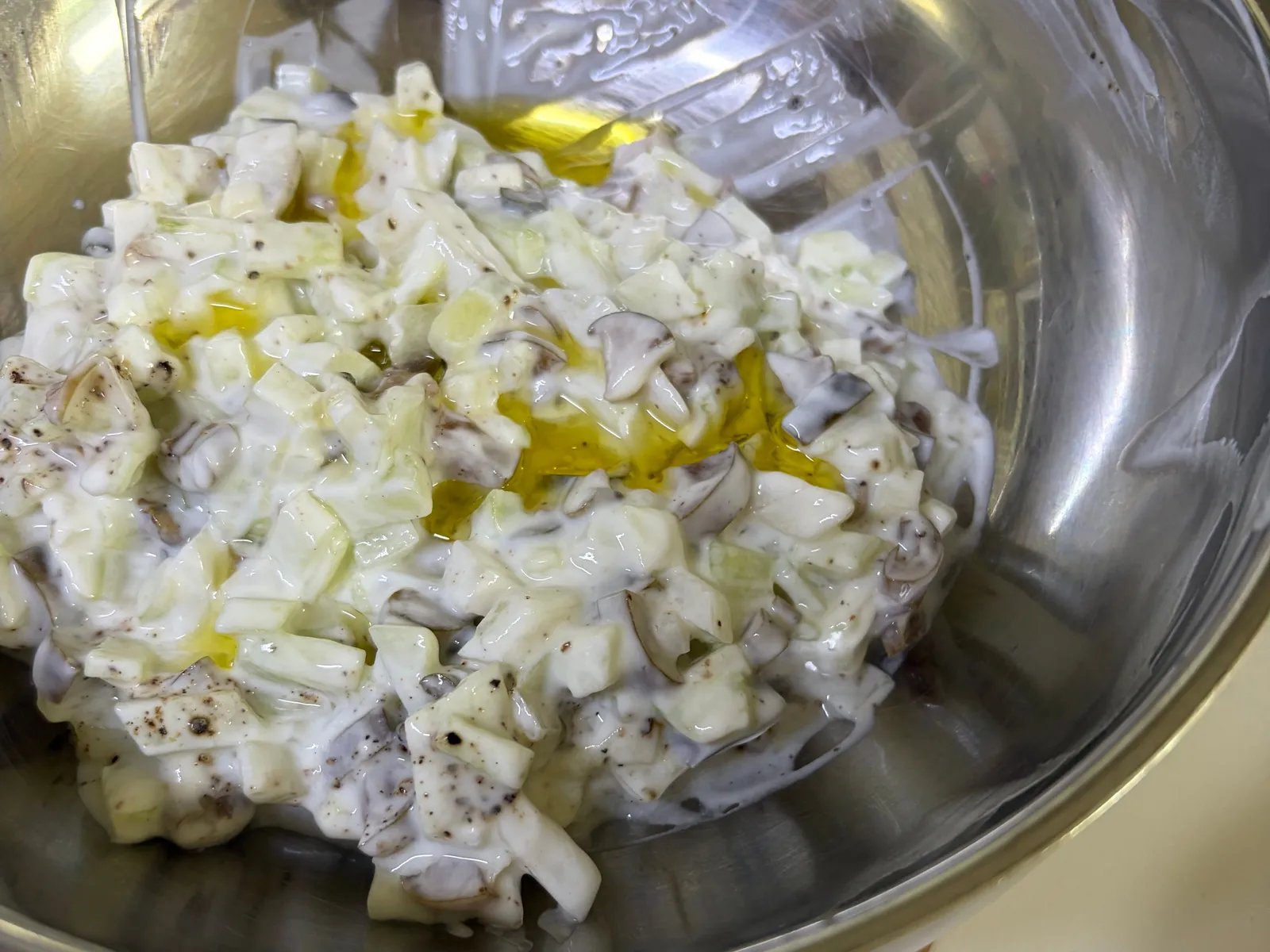
This Korean tzatziki uses oiji, the salt-brined cucumber pickle found in Korean kitchens, in place of fresh cucumber. It takes about 10 minutes: you dice the pickle, stir it into plain yogurt with no added sugar, and season it. This is a breakfast I make at home in Korea.
Classic Greek tzatziki starts with fresh cucumber that is grated, salted and squeezed dry. Oiji has already been through salt, so that step is gone. The pickle arrives firm, seasoned and ready to cut.
What is oiji?
Oiji is cucumber preserved in salt brine. Over time the cucumbers turn from bright green to a yellow-green or olive color, and the flesh becomes dense and crunchy.
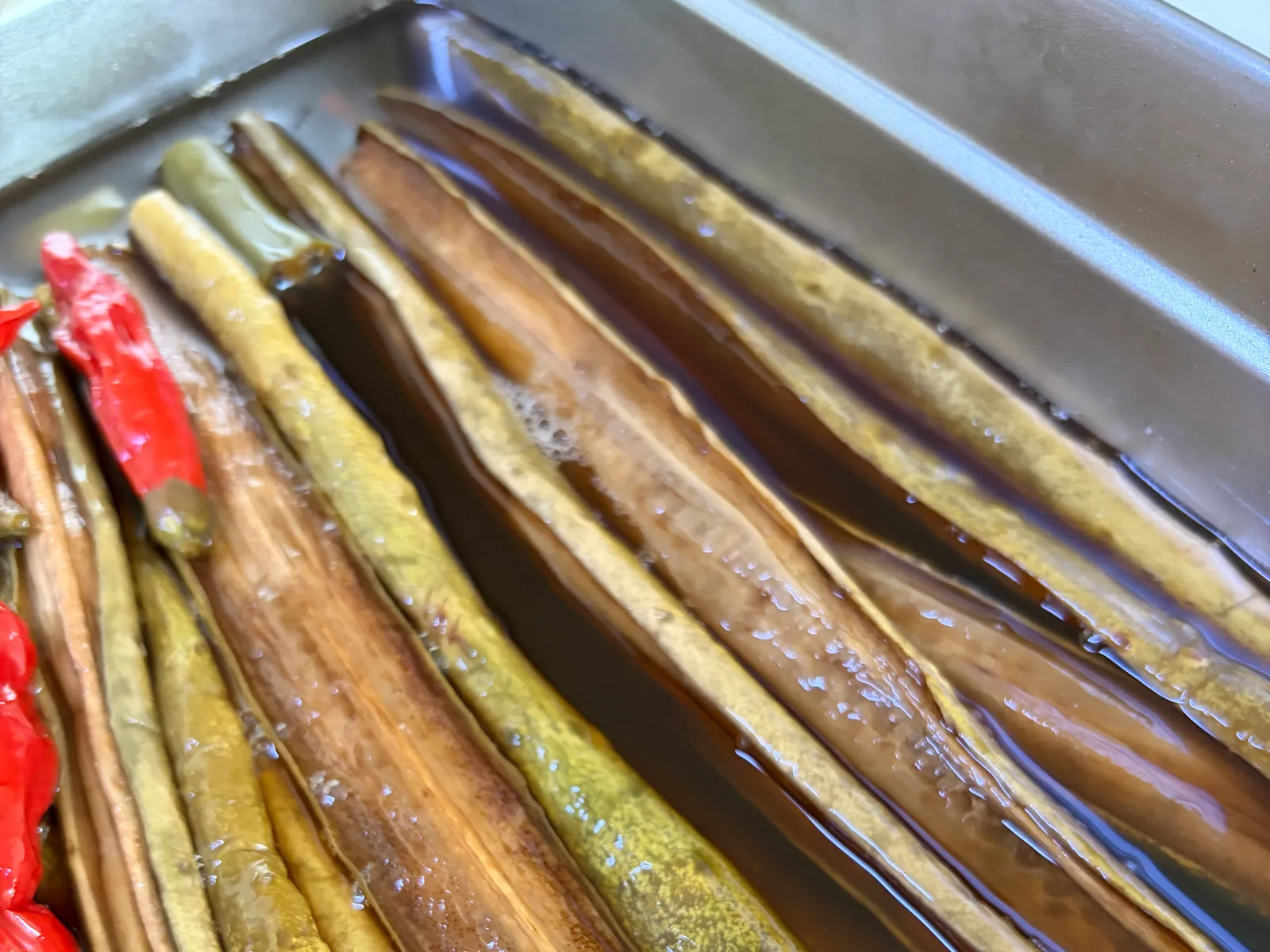
The oiji in these photos was made by my mom, who ran a Korean restaurant for 25 years. She dried the cucumbers before brining them, a step she picked up from the YouTube channel of Korean TV personality Lee Young-ja.
The taste is salty first, with a mild sourness behind it. In Korea, oiji is usually sliced and eaten as a side dish with rice. In this recipe it does the job that cucumber and salt do together in tzatziki.
How I season oiji tzatziki
Before dicing, I rinse the oiji lightly and squeeze out a little of the liquid. That takes the saltiness down a step and keeps the yogurt from turning watery.
I buy plain yogurt with no sugar added. The tub I use lists 4 g of protein and 6 g of sugars per 100 g on its label, and the sugars come from the milk. For 3 heaping tablespoons of yogurt and 3 strips of oiji, I add 1 teaspoon of allulose, 1 to 2 teaspoons of white balsamic vinegar and black pepper.
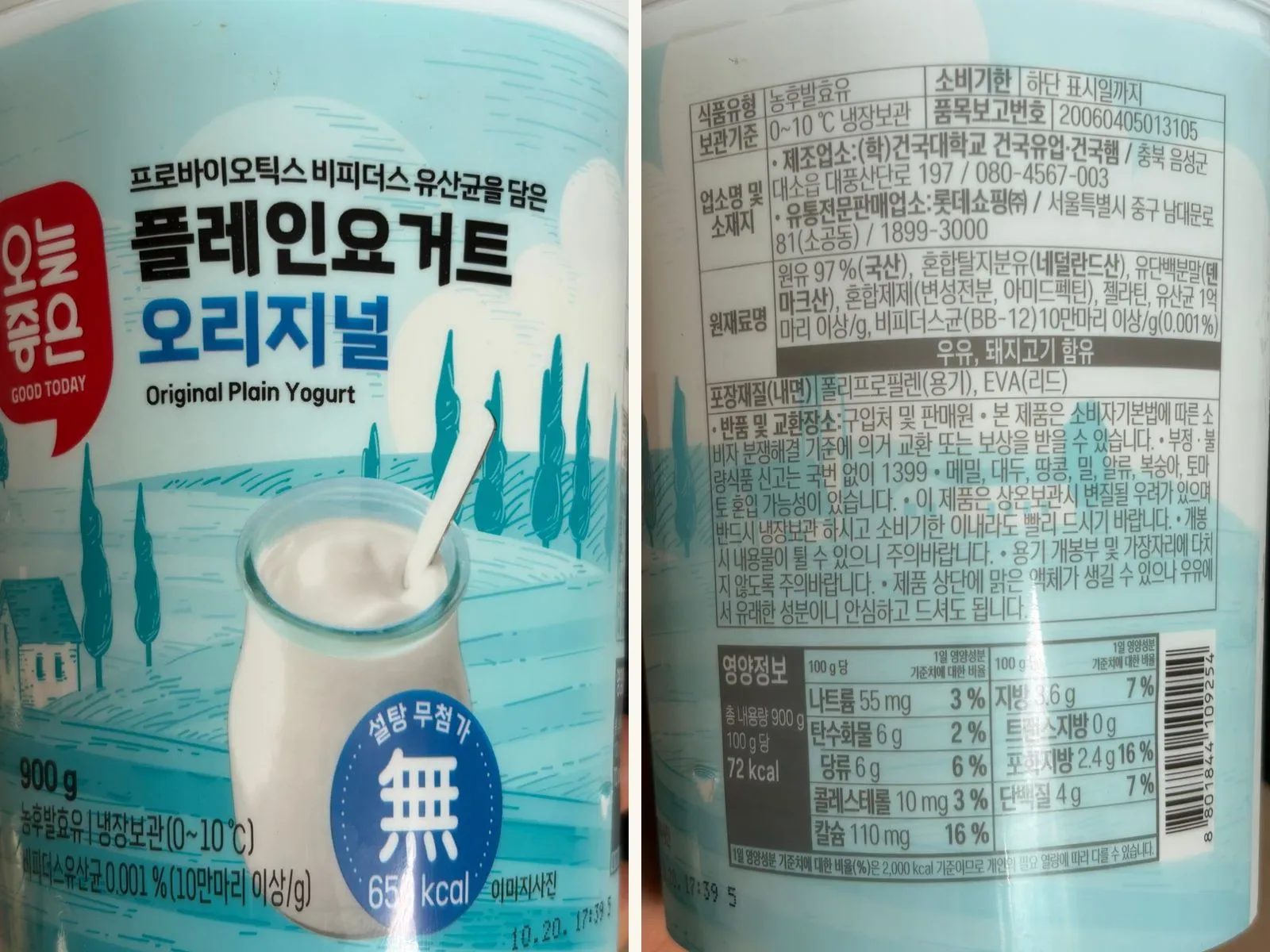
This amount is one serving for me, and I am a big eater, so it is a generous portion.
The whole thing takes about 10 minutes because nothing is cooked. The oiji and the yogurt are already made, so the work is rinsing, cutting and stirring.
The allulose softens the sour edge of the yogurt. The white balsamic vinegar adds brightness without turning the dip brown, which regular balsamic would do.
Salt is the one seasoning I often skip. The oiji carries enough. A drizzle of olive oil goes on at the end.
How we eat it: one-bite tortilla with egg
At breakfast I tear an oatmeal tortilla into small pieces. Each piece gets a spoonful of oiji tzatziki, some scrambled egg and a few baked beans, and it goes in as one bite.

The yogurt and the egg both bring protein. The tortilla recipe is here: 3-ingredient blender oatmeal tortillas. For a full folded version, see the Korean tzatziki breakfast wrap.
How it fits a Mediterranean-style plate
- Olive oil
- Vegetables or fruit
- Whole grains
- Beans or lentils
- Fish or seafood
- Nuts or seeds
Swaps and variations
- Want it thicker? Use Greek yogurt in place of plain yogurt. Greek yogurt is strained, so the dip holds its shape more.
- No oiji? Use salt-brined dill pickles with no added sugar, diced the same way.
- No allulose? Leave it out, or use a small amount of honey.
- No white balsamic vinegar? Use lemon juice or rice vinegar.
Make ahead and storage
I make oiji tzatziki right before breakfast and we eat it straight away, so I do not store it. If you prepare ahead, dice the oiji the night before and stir it into the yogurt in the morning.
Korean Oiji Tzatziki with Plain Yogurt (10 Minutes)
Ingredients
- 3 heaping tablespoons (about 100 g) plain yogurt with no added sugar
- 3 strips oiji (Korean salt-brined cucumber pickles)
- 1 teaspoon (5 ml) allulose
- 1 to 2 teaspoons (5 to 10 ml) white balsamic vinegar
- Black pepper, to taste
- A small pinch of salt (optional)
- Extra virgin olive oil, to drizzle
Instructions
- Rinse the oiji briefly under water and squeeze out a little of the liquid.
- Dice the oiji into small cubes.
- Put 3 heaping tablespoons of plain yogurt with no added sugar in a bowl and stir in the diced oiji.
- Season with 1 teaspoon of allulose, 1 to 2 teaspoons of white balsamic vinegar and black pepper. Taste before adding any salt, because the oiji is already salty.
- Drizzle with olive oil and serve.
Questions
What is oiji?
Oiji is a Korean cucumber pickle. Whole cucumbers are kept in salt brine until they turn yellow-green and firm. Oiji tastes salty and a little sour, and it stays crunchy when you cut it.
Do I need to add salt to oiji tzatziki?
Usually not. Oiji is already salty from the brine, so the yogurt gets its seasoning from the pickle. Taste the tzatziki first and add a small pinch of salt only if you want more.
What do you eat oiji tzatziki with?
At my table, oiji tzatziki goes on a torn piece of oatmeal tortilla with scrambled egg and a few baked beans on top, eaten in one bite. It also works as a dip for raw vegetables or as a sauce inside a breakfast wrap.