Tomato Kimchi Jjigae (Korean Kimchi Stew) in 20 Minutes
Kimchi jjigae with two canned whole tomatoes, pork, tofu and three slices of dried apple, simmered in plain water. Ready in 20 minutes and serves 2.
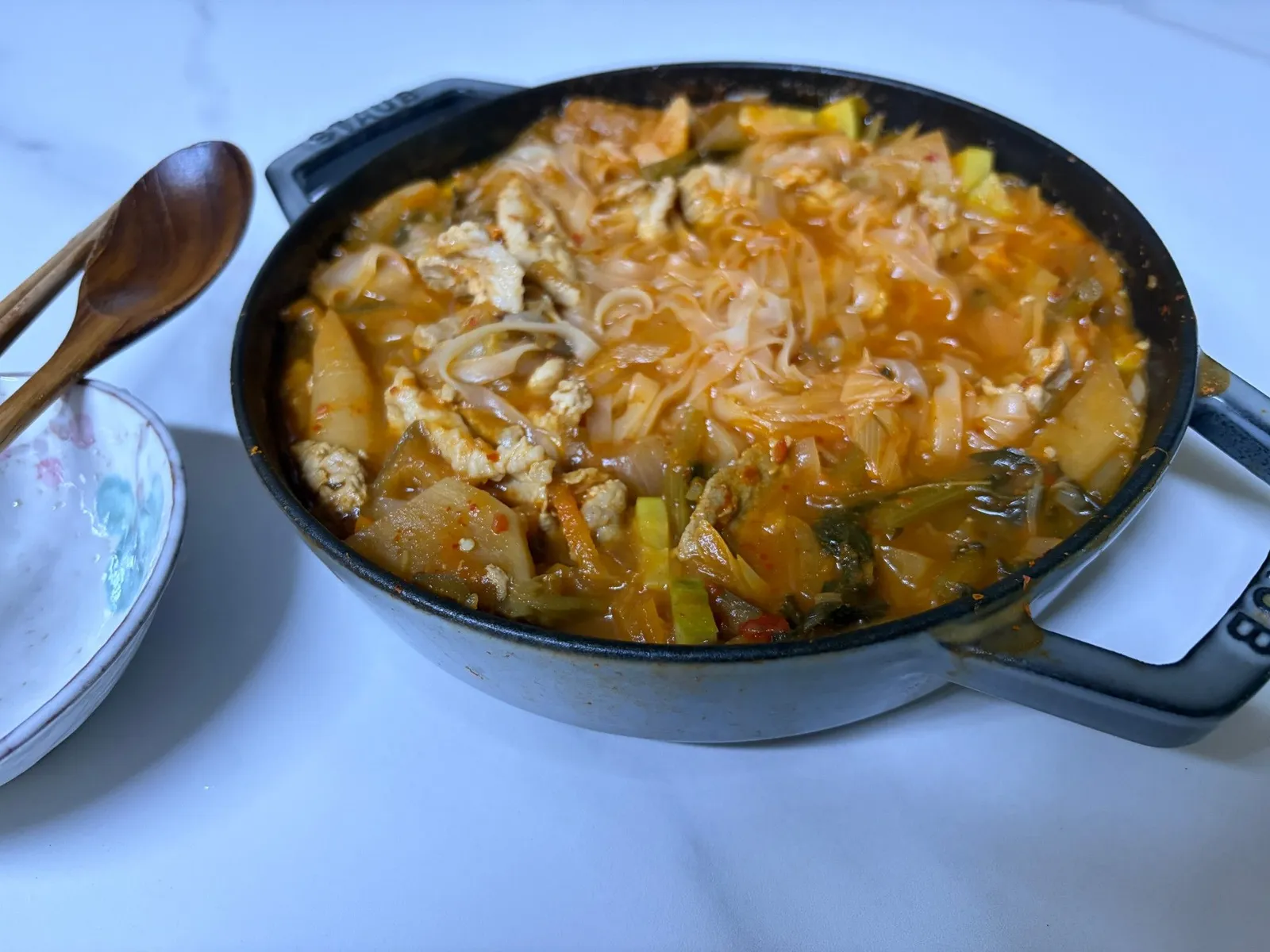
Kimchi jjigae is Korean kimchi stew, and this kimchi stew recipe is how I make it at home: pork and tofu, tomato in the broth, and plain water in place of stock. It takes about 20 minutes and one pan serves 2.
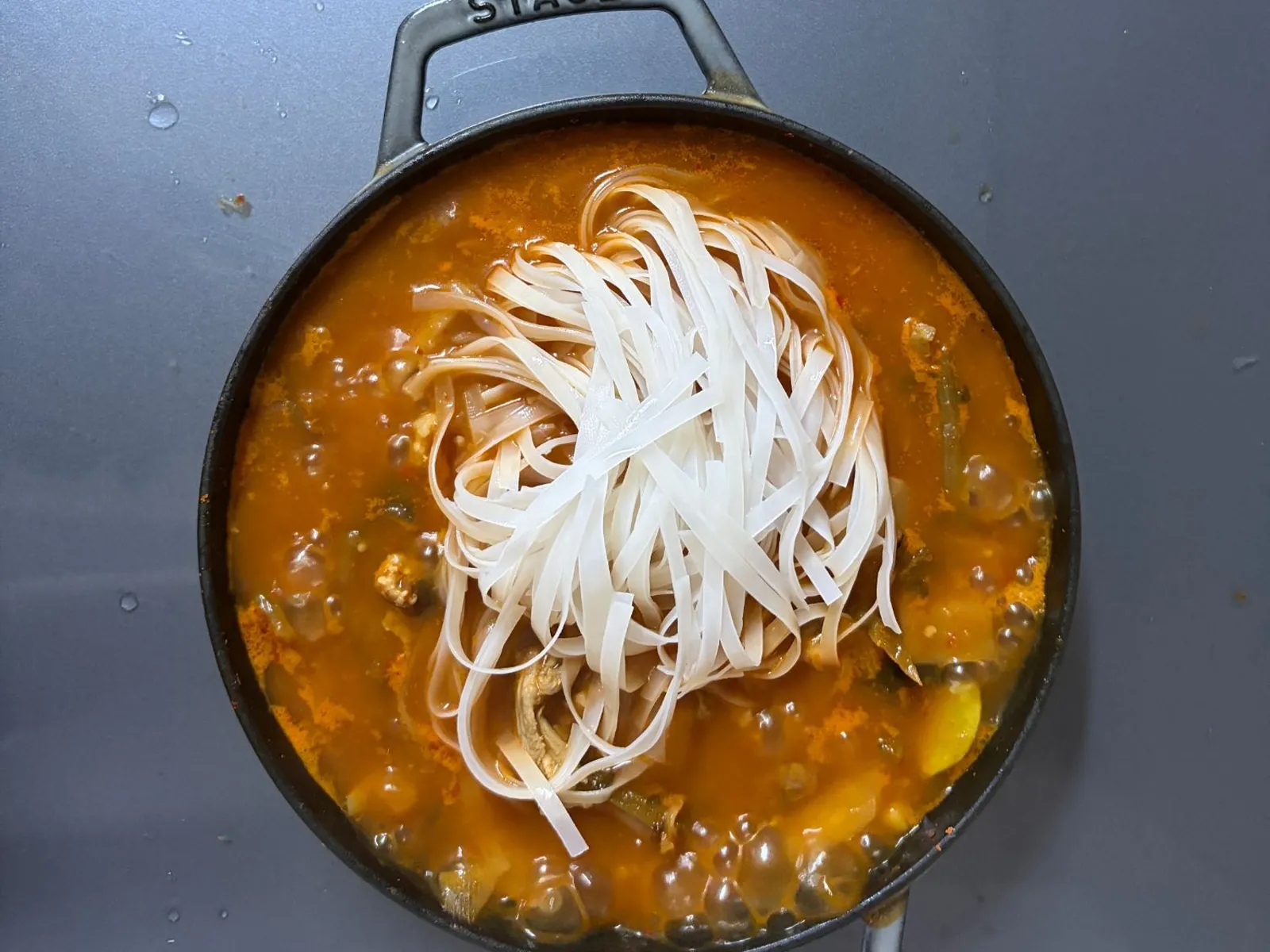
I ate this for breakfast on a morning when I was very hungry. The photo at the top is from the first time I made it, when I added rice noodles.
Why I put tomato in kimchi jjigae
Tomato is my one real trick for kimchi jjigae. It makes the savory taste of the broth stronger, the way it tastes at a restaurant known for kimchi stew.
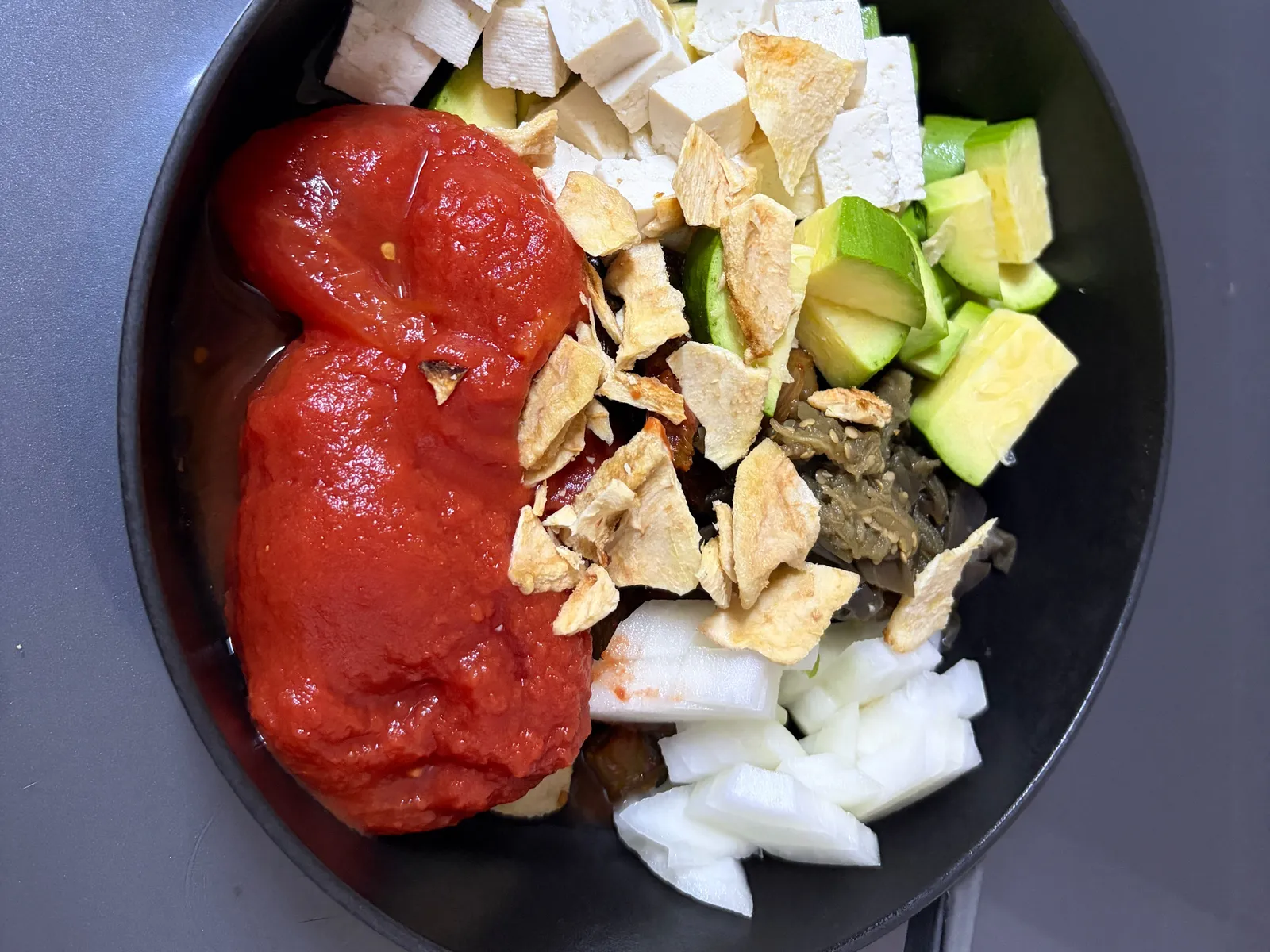
My order of choice is fresh tomatoes when they are in season, then canned whole tomatoes, then tomato paste. The first time I photographed this stew I used 1 tablespoon of tomato paste. The second time I used canned whole peeled tomatoes, which is what you see in the pan above.
Dried apple for a little sweetness
A little sweetness makes kimchi jjigae taste better. The second time I added 3 slices of dried apple with the vegetables, and the stew was much better for it.
Plain water, vinegar and Yondu
I do not make stock. Plain water goes in until the pan is nearly full, and the kimchi, pork and tomato do the seasoning. Then I cook the broth down.
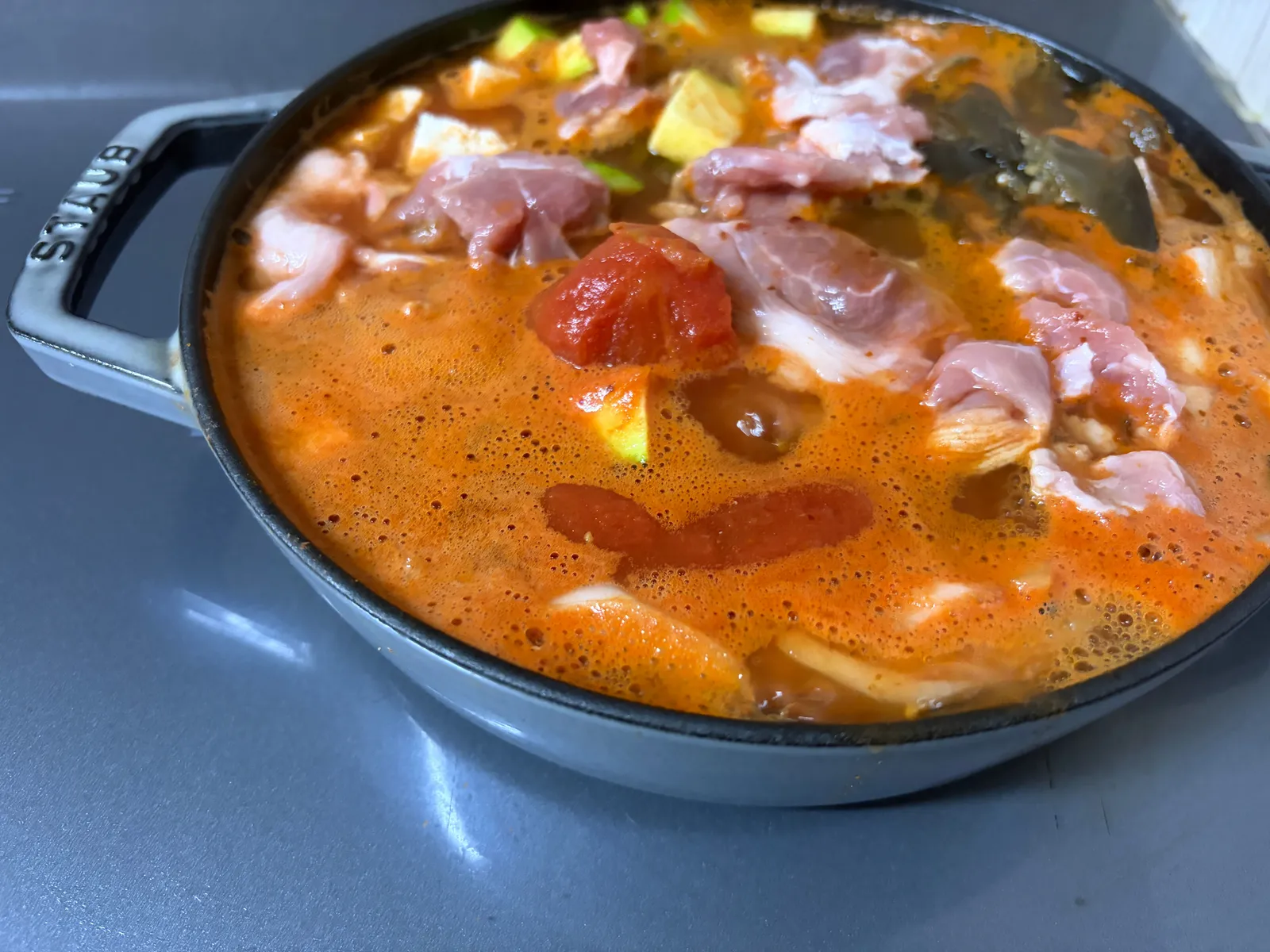
The pan boils with the lid on for 10 minutes. Then I lower the heat and simmer for 5 more minutes, until the broth has reduced. Kimchi jjigae gets better the longer it simmers.
Two things can go in near the end. The first is half a teaspoon of vinegar. I skip the vinegar when the kimchi is already very sour, which is what happened the second time with my mustard green kimchi.
The second is Yondu, a Korean fermented soybean seasoning, for when the stew tastes flat. I used half a teaspoon. In the United States it is sold as Yondu Vegetable Umami.
Rice noodles soaked the night before
I like noodles more than rice, so my kimchi jjigae often gets rice noodles. I soak one single-serving pack in water the night before and leave it in the fridge. The next day the noodles go straight into the stew and are ready quickly.
The second time I left the noodles out and ate the stew as it was.
The kimchi, the eggplant kimchi and the pork
Any well-fermented kimchi works in this stew. The second time mine was mustard green kimchi, called gat-kimchi in Korean.
The soft grey-green pieces in the pan are eggplant kimchi that my mom made. It had fermented too far to eat on its own, so it went into the stew. Eggplant kimchi is hard to find outside Korea, so treat it as optional.
For the pork I buy the cheapest cut in the store. I like fatty pork in this stew, but any inexpensive cut works.
The vegetables are whatever is in the fridge, in the amount I want to eat. This time that was half a block of tofu, a quarter of a Korean zucchini and some onion.
Swaps and variations
- No canned whole tomatoes? Use 1 tablespoon of tomato paste. In tomato season, use fresh ripe tomatoes.
- No dried apple? Leave it out. The stew works without it and tastes a little less sweet.
- No eggplant kimchi? Leave it out, or add a little more of the kimchi you have.
- Use the vegetables you have, in the amount you want to eat. Zucchini, onion and tofu are what I had.
Make ahead and storage
I eat kimchi jjigae the day I make it, and this pan was gone at breakfast. To get ahead, soak the rice noodles in water the night before and keep them in the fridge.
Tomato Kimchi Jjigae (Korean Kimchi Stew) in 20 Minutes
Ingredients
- Kimchi, about 1 1/2 small ladles, plus kimchi juice to taste
- Pork, any inexpensive cut, sliced
- 2 canned whole peeled tomatoes
- 1/2 block tofu (about 150 g / 5 oz), cubed
- 1/4 Korean zucchini, cut into chunks
- Onion, cut into chunks, as much as you like
- 3 slices dried apple
- Plain water, enough to nearly fill the pan
- 1/2 teaspoon (2.5 ml) Yondu Vegetable Umami, or to taste
- 1/2 teaspoon (2.5 ml) vinegar, only if the kimchi is not very sour
- Over-ripe eggplant kimchi (optional)
- 1 single-serving pack flat rice noodles, soaked in water overnight (optional)
Instructions
- Put the kimchi, pork, whole tomatoes, tofu, zucchini, onion and dried apple in a wide pan. Add the eggplant kimchi if you have it.
- Pour in plain water until the pan is nearly full.
- Cover the pan and boil for 10 minutes.
- Lower the heat and simmer for 5 more minutes, until the broth has reduced and sits just below the top of the ingredients.
- Taste the broth. Stir in 1/2 teaspoon of Yondu if it needs more seasoning, and 1/2 teaspoon of vinegar if your kimchi is not very sour.
- If you are adding rice noodles, drain the soaked noodles, lay them on top of the stew and cook until the noodles are soft.
Questions
What does tomato do in kimchi jjigae?
Tomato gives kimchi jjigae a deeper, rounder savory taste. To me it tastes like the tomato kimchi stew served at a good restaurant. I use fresh tomatoes in season, canned whole tomatoes the rest of the year, and tomato paste when that is all I have.
Can I use tomato paste in place of whole tomatoes?
Yes. I have made this kimchi jjigae with 1 tablespoon of tomato paste for a pan that serves 2. If canned whole tomatoes are in the cupboard, I use 2 of those first.
Do I need stock for kimchi jjigae?
No. I use plain water. The kimchi, the pork and the tomato season the broth, and half a teaspoon of Yondu at the end fixes it if it tastes flat.
When should I add vinegar to kimchi jjigae?
Add half a teaspoon of vinegar near the end when the kimchi is young or mild. When the kimchi is already very sour, skip the vinegar. My mustard green kimchi was very sour the last time, so I left the vinegar out.
Is this a pork kimchi stew or a kimchi tofu stew?
Both. My kimchi jjigae has sliced pork and half a block of tofu in the same pan. For a kimchi tofu stew with no meat, leave out the pork and use a whole block of tofu.
Why rice noodles and not ramen noodles?
I like noodles more than rice with stew. I used to drop ramen noodles into kimchi jjigae, but at some point I stopped liking the taste of wheat flour, so now I use rice noodles.