Oatmeal Kimchi Jjigae with 5 Spoons of Oats and Tomato
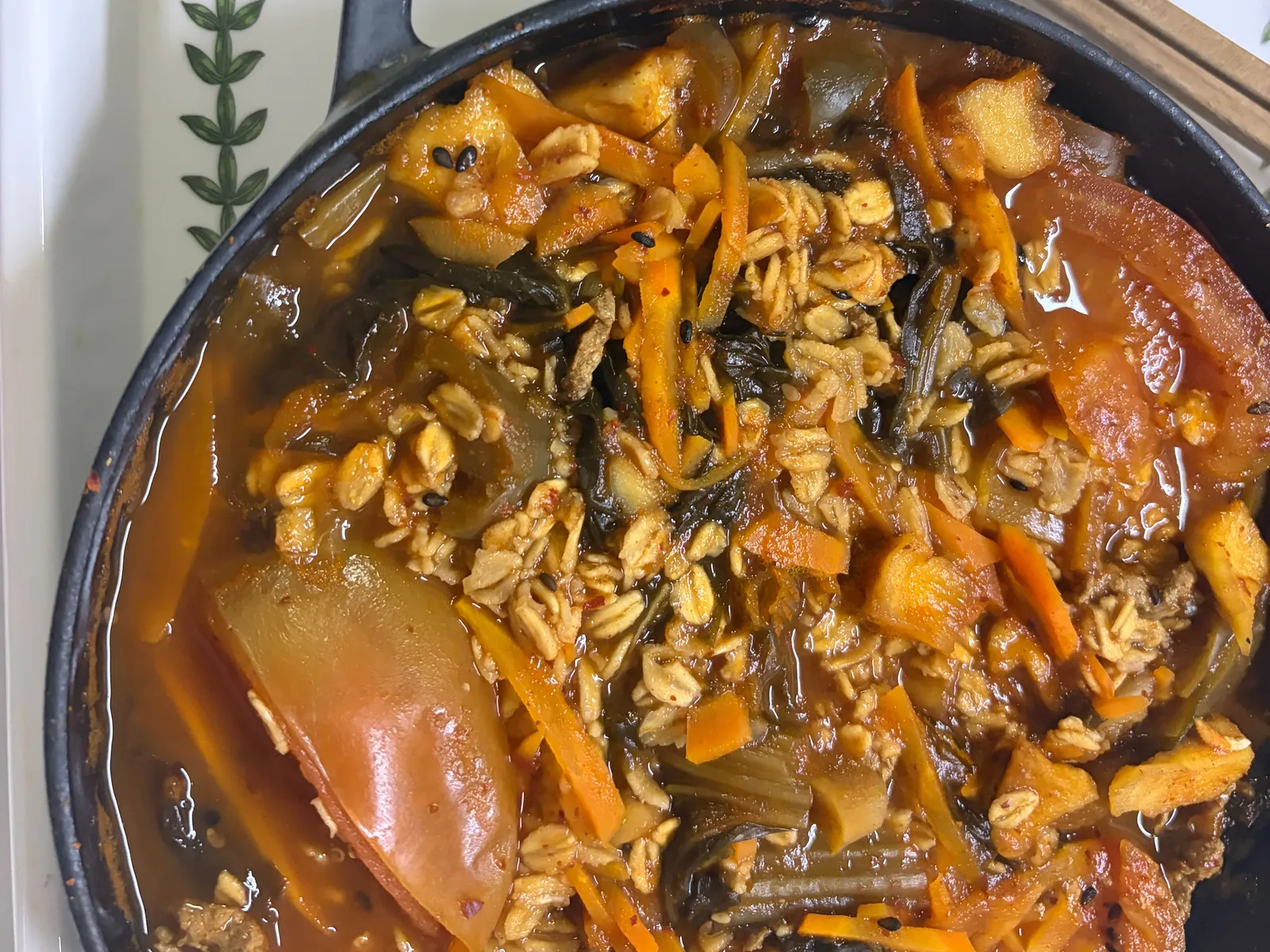
Breakfast kimchi jjigae with 1 fresh tomato, 1 tablespoon of tomato paste and 5 heaping spoons of rolled oats cooked in the broth. Any vegetables work.
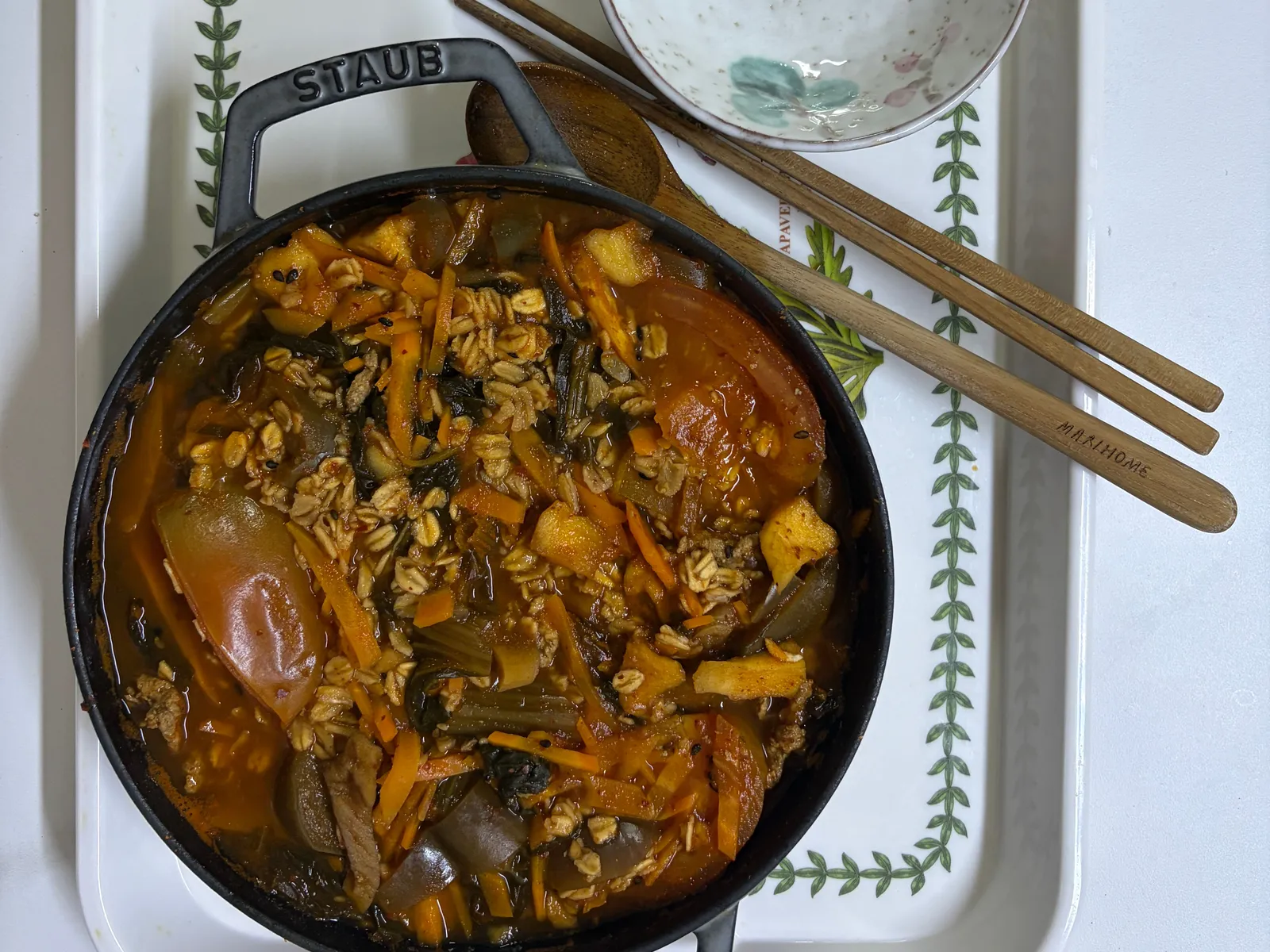
Oatmeal kimchi jjigae is kimchi jjigae, the Korean kimchi stew, with rolled oats cooked right in the broth. My breakfast version has 1 fresh tomato, 1 tablespoon of tomato paste and 5 heaping spoons of oats in one small pot. It takes about 20 minutes and makes 1 serving.
I made this pot on a November morning and ate it for breakfast. If you have been looking for savory oatmeal that is not just oats with an egg on top, kimchi oatmeal like this is a good place to start.
Why put oats in kimchi jjigae
In Korea, kimchi jjigae comes with a bowl of rice. Here the oats go into the pot instead, so the stew and the grain cook together and breakfast is one pot.
Rolled oats suit kimchi jjigae for a few reasons. They soften in about 5 minutes in a simmering broth. They soak up the sour, spicy kimchi and tomato broth, so every spoonful tastes like the stew. And they thicken the broth a little, the way rice does in a Korean juk.
There is one more reason I like having oats in a Korean breakfast. Oats are a whole grain; according to the Whole Grains Council, oats are almost always eaten in their whole-grain form, flakes included. If you keep a bag of rolled oats in the cupboard for sweet oatmeal, this kimchi jjigae with oats needs nothing new from the store.
Tomato makes kimchi jjigae better
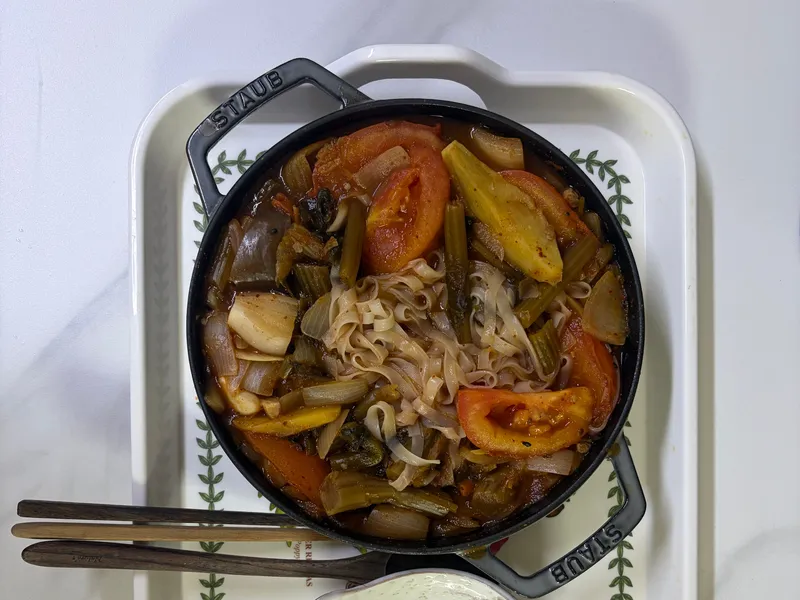
Kimchi jjigae tastes good with anything in it, and it is even better with tomato. This time I used two kinds. One fresh tomato, cut into wedges, softens in the broth and you can still pick out the pieces in the photo. One tablespoon of tomato paste goes into the broth itself.
I have written about tomato in kimchi stew before, with canned whole tomatoes and dried apple. If you like this oatmeal version, try my tomato kimchi jjigae next.
Gat-kimchi and dried apple
The kimchi this time was mustard green kimchi, called gat-kimchi in Korean. The dark green leaves you see all through the pot are the gat-kimchi greens; that is just the color they turn in the stew. Any well-fermented napa cabbage kimchi works the same way.
The small yellow cubes are dried apple. A little sweetness makes kimchi jjigae taste better, so I add a few pieces with the vegetables. Leave it out if you have none.
Use whatever vegetables you have
Kimchi jjigae goes well with almost any vegetable, so this is a good breakfast for the end of the week when the fridge is half empty. In the photo you can see shredded carrot and onion. Zucchini, mushrooms, cabbage, spinach, bean sprouts and potatoes all work too.
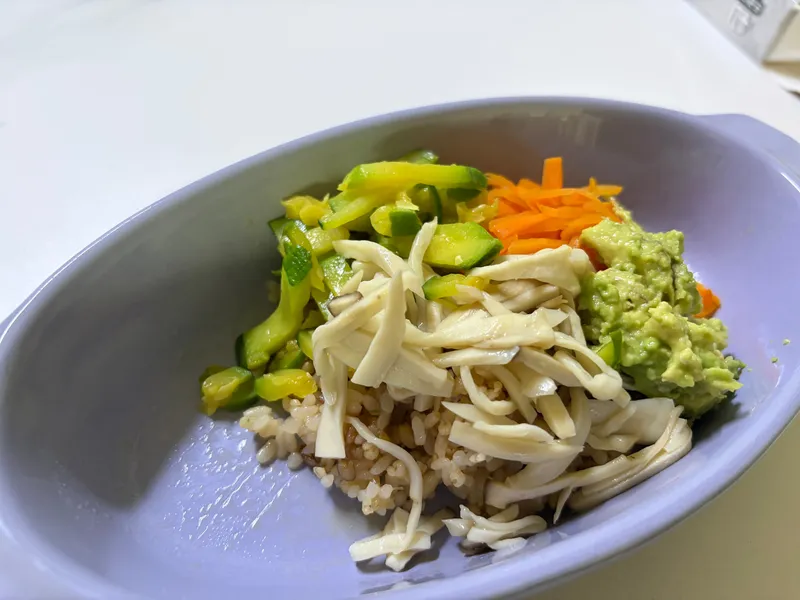
Cut the vegetables small so they cook in the same time as the kimchi. If you keep a box of cooked vegetables in the fridge, like my steamed Korean vegetables, they can go into the pot with the oats at the end.
A Korean breakfast for the morning after
Korea has a word for eating something hot the morning after a night of drinking: haejang. There is a whole dish named for it, haejangguk, often called Korean hangover soup, and many restaurants serving it open early in the morning.
A hot, spicy, sour stew like kimchi jjigae is the kind of breakfast many Koreans want on that morning. Oatmeal kimchi jjigae fits right in: soupy, warm and made in one pot with things already in the kitchen. It is a food custom, not a remedy, and nothing here is health advice.
More ways to eat oats for breakfast
If you want oats in a different form, my blender oatmeal tortillas turn the same rolled oats into a wrap for eggs and vegetables.
Swaps and variations
- No fresh tomato? Use canned whole tomatoes, the way I do in my tomato kimchi jjigae, or use the tomato paste on its own.
- Quick oats work in place of rolled oats. They soften in a minute or two and make a thicker, smoother broth.
- Cooked rice in place of oats gives you the more usual Korean breakfast: kimchi jjigae with rice in the pot.
- Swap in any vegetables you have. Zucchini, mushrooms, cabbage, spinach, bean sprouts and potatoes all go well in kimchi jjigae.
Make ahead and storage
Oatmeal kimchi jjigae is best eaten the morning you make it. The oats keep soaking up broth as the stew sits, so leftovers turn thick, almost like porridge. Add a splash of water when you reheat it. To get ahead, simmer the kimchi and tomato broth the night before, keep it in the fridge, and stir in the oats while it reheats in the morning.
Oatmeal Kimchi Jjigae with 5 Spoons of Oats and Tomato
Ingredients
- Mustard green kimchi (gat-kimchi) or any well-fermented kimchi, as much as you like, plus a little kimchi juice
- 1 fresh tomato, cut into wedges
- 1 tablespoon (15 ml) tomato paste
- 5 heaping tablespoons rolled oats (about 1/2 cup / 45 g)
- A few pieces of dried apple, diced (optional)
- Any vegetables you have, cut into bite-size pieces (carrot and onion in the photo)
- Sliced pork or tofu (optional)
- Water, enough to cover
Instructions
- Put the kimchi, the vegetables, the dried apple and the pork or tofu, if using, in a small pot. Add the tomato wedges and the tomato paste.
- Pour in water to just cover everything. Bring it to a boil, then simmer until the kimchi is soft and the broth turns orange-red.
- Stir in the 5 heaping tablespoons of rolled oats. Simmer for about 5 minutes, until the oats are soft and the broth has thickened a little.
- Taste the broth. Add a spoon of kimchi juice if you want it more sour, or a splash of water if it has become too thick.
Questions
Can you put oatmeal in kimchi jjigae?
Yes. Rolled oats go into kimchi jjigae the same way rice or noodles would. Stir them into the simmering broth for the last few minutes, and they soften, soak up the kimchi and tomato flavor and thicken the stew a little.
Do the oats get mushy in kimchi stew?
Rolled oats hold their shape if you add them near the end and eat the stew right away, as you can see in the photo. If the stew sits for a while, the oats keep absorbing broth and the stew becomes thick like porridge, which some people like.
What vegetables can I put in kimchi jjigae?
Almost any vegetable works in kimchi jjigae. Carrot, onion, zucchini, mushrooms, cabbage, spinach, bean sprouts and potato are all common. Use what is already in the fridge, in the amount you want to eat.
Is kimchi jjigae a Korean hangover food?
Yes, kimchi jjigae is one of the hot, spicy soups Koreans often eat the morning after drinking, a custom called haejang. It is a food tradition and a comforting breakfast, not a treatment, so it is no substitute for water, rest or medical advice.
Should I use fresh tomato or tomato paste in kimchi jjigae?
This oatmeal kimchi jjigae uses both: 1 fresh tomato cut into wedges and 1 tablespoon of tomato paste stirred into the broth. If you only have one of them, use that one. Canned whole tomatoes work too.