Oiji Recipe: Crunchy Korean Cucumber Pickles, 3 Ingredients
An oiji recipe made with only cucumbers, coarse salt and water. Drying the cucumbers before brining makes these Korean pickles extra crunchy, with no sugar.
This oiji recipe uses only cucumbers, coarse salt and water, with no sugar. The one unusual step is drying the cucumbers before they go in the brine, which makes these Korean cucumber pickles really crunchy. It takes about 20 minutes of hands-on time, plus drying and 7 to 10 days of waiting.
Cucumbers come and go with the seasons in Korea. That is why Korean homes turn them into oiji instead of the pickles you may know.
The one unusual step: drying the cucumbers
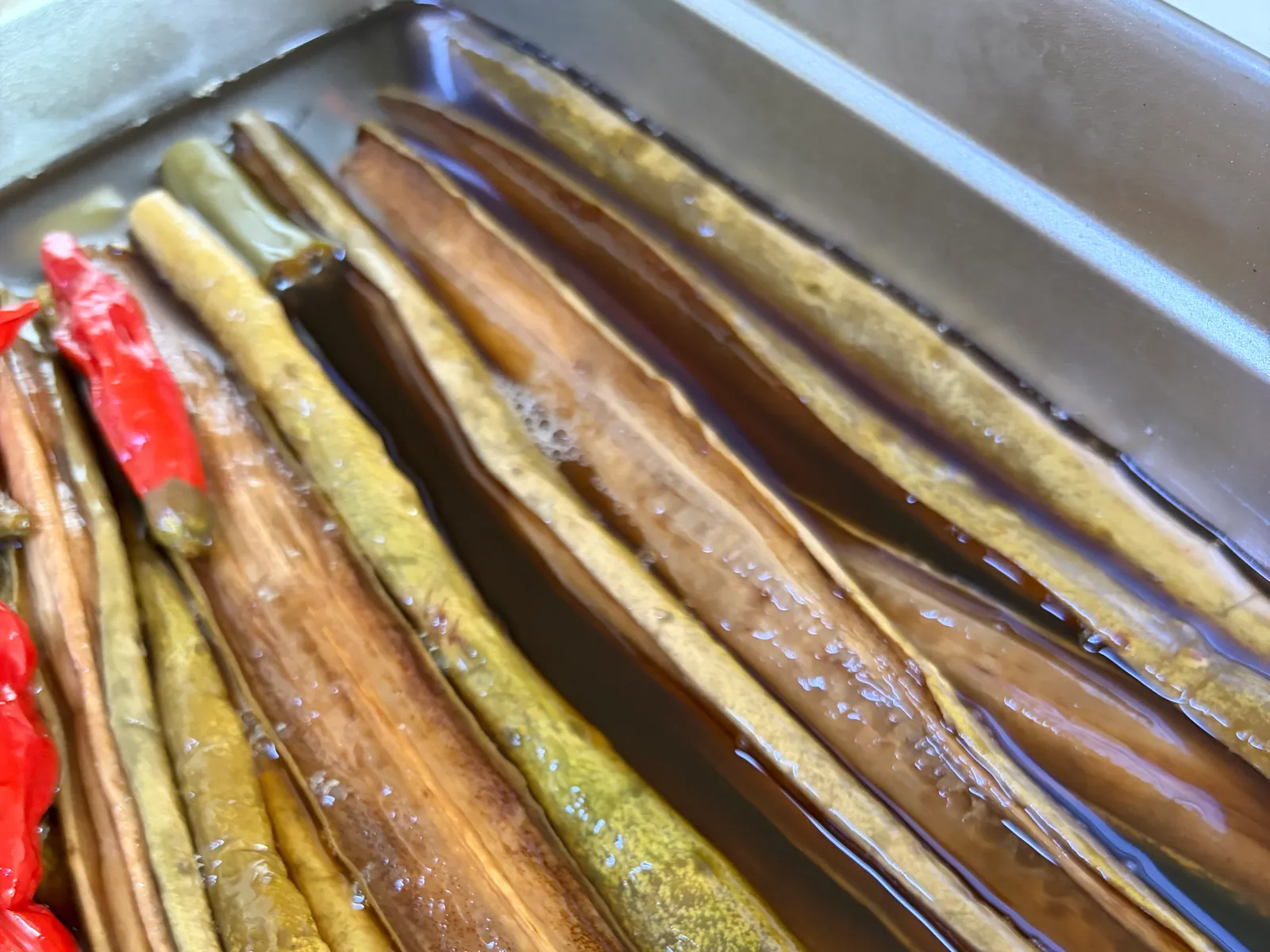
Drying is what makes this oiji different. In Korean the texture is called kkodeul-kkodeul, which means chewy and crunchy at once. My mom dries the cucumbers before she brines them, and the oiji in the photo above is hers.
She got this idea from a short video on the Lee Young-ja TV channel. Lee Young-ja is a Korean TV personality, and in the video her cucumbers hang on a rack in a walk-in cold room while she decides what to pickle them into.
I do not have an exact drying time. The video does not give one, and I did not get a number from my mom. So go by how the cucumbers look: the skin should be dry and slightly wrinkled.
Where this recipe comes from
I want to be clear about this part. My mom ran a Korean restaurant for 25 years, but these are not her measurements. I did not get her amounts, so this recipe is not her recipe.
The brine amounts and timing below follow the oiji recipe on Korean Bapsang, a well-known Korean recipe site. It uses a 10-to-1 ratio of water to salt by volume. I added the drying step to that method.
Your oiji will not match the top photo exactly. My mom's batch sits in a dark brown liquid with red chili peppers, and I do not know everything that went into it. A plain salt brine like this one gives you yellow-green cucumbers in a lighter brine.
Why there is no sugar in this oiji
Some popular oiji recipes use sugar and vinegar. I wanted oiji that is not sweet, so this version stays with the plain salt brine. The sourness comes from time.
That is also why oiji without sugar works so well in savory food. It adds salt and sourness without pulling a dish toward sweet.
What the days look like
Most of this recipe is waiting. Here is the schedule:
- Day 1: Boil the brine, pour it over the dried cucumbers and weigh them down.
- Day 3 or 4: Strain the brine, boil it, cool it and pour it back.
- Day 8 to 11: Move the oiji to the fridge.
Keep the cucumbers under the brine the whole time. Anything floating above the surface is what tends to spoil.
How to eat oiji
Oiji is very salty straight from the brine, so do not judge it at that stage. Slice it, soak the slices in fresh water, then taste. The soaking time depends on your batch and how salty you like it.
In Korea, oiji is usually sliced and eaten as a side dish with rice. At my house it also goes somewhere less traditional. I dice it and stir it into plain yogurt for my Korean oiji tzatziki, then eat that for breakfast in a Korean tzatziki breakfast wrap.
For tzatziki, I rinse the oiji briefly and squeeze out a little of the liquid. The yogurt stays thick and the pickle stays crunchy.
Swaps and variations
- No Korean cucumbers? Use small, thin Kirby pickling cucumbers.
- No Korean coarse sea salt? Use another coarse sea salt and weigh it, because fine salt packs more tightly into a cup.
- Want a little heat? My mom's batch in the photo has red chili peppers in the brine.
Make ahead and storage
Keep oiji in its brine in the fridge. Korean Bapsang notes that the flavor keeps developing for 2 to 3 weeks or longer. Always use a clean utensil, and throw the batch out if it smells bad or grows mold.
Oiji Recipe: Crunchy Korean Cucumber Pickles, 3 Ingredients
Ingredients
- 10 to 12 small, thin Korean cucumbers or about 20 Kirby cucumbers
- 1 cup (about 200 g) Korean coarse sea salt
- 10 cups (about 2.4 L) water
Instructions
- Rinse the cucumbers and pat them dry.
- Hang the whole cucumbers on a rack, or lay them out, in a cool, airy spot until the skin looks dry and slightly wrinkled. There is no exact time, so go by how they look.
- Put the dried cucumbers in a large heatproof container.
- Bring the water and salt to a boil in a pot and boil for 3 to 4 minutes, until the salt dissolves.
- Pour the boiling brine over the cucumbers. Weigh them down with a plate or a clean stone so they stay under the brine. Cover once cool and leave at room temperature for 2 to 3 days.
- Pour the brine into a pot, straining off any white film. Boil it for a few minutes and let it cool completely.
- Pour the cooled brine back over the cucumbers. Cover and leave at room temperature for 5 to 7 days.
- Move the oiji to the fridge. To eat, slice it and soak the slices in fresh water until the saltiness suits you.
Questions
What is oiji?
Oiji is a Korean cucumber pickle made by keeping whole cucumbers in salt brine. It has no sugar or vinegar in this version. The cucumbers turn yellow-green and firm, and they taste salty with a mild sourness.
Why dry the cucumbers before making oiji?
Drying the cucumbers makes the finished oiji very crunchy and chewy, which Koreans call kkodeul-kkodeul. My mom picked up this step from Lee Young-ja's YouTube channel.
How long does oiji take to make?
This oiji recipe takes about 20 minutes of hands-on time, plus drying the cucumbers and 7 to 10 days at room temperature. After that it goes into the fridge.
How is oiji different from dill pickles?
Oiji uses only cucumbers, salt and water, so it has no dill, vinegar or sugar. Korean pickled cucumbers made this way taste saltier than dill pickles, so you soak the slices in water before eating.
Can I make oiji without sugar?
Yes. Some popular Korean recipes use sugar and vinegar, but oiji without sugar is the simple salt brine in this recipe. The sourness comes from the time in the brine, not from anything added.
What is the white film on my oiji brine?
The white film is called golmaji in Korean. Korean Bapsang's method strains it off when the brine is boiled the second time. If you see fuzzy mold or the oiji smells bad, throw the batch out.