Aged Radish Kimchi Pasta with Shrimp Paste (15 Minutes)
15-minute pasta stir-fry with over-fermented radish kimchi soaked for 2 days, shrimp paste and garlic. Finished with a drizzle of olive oil. Serves 1.
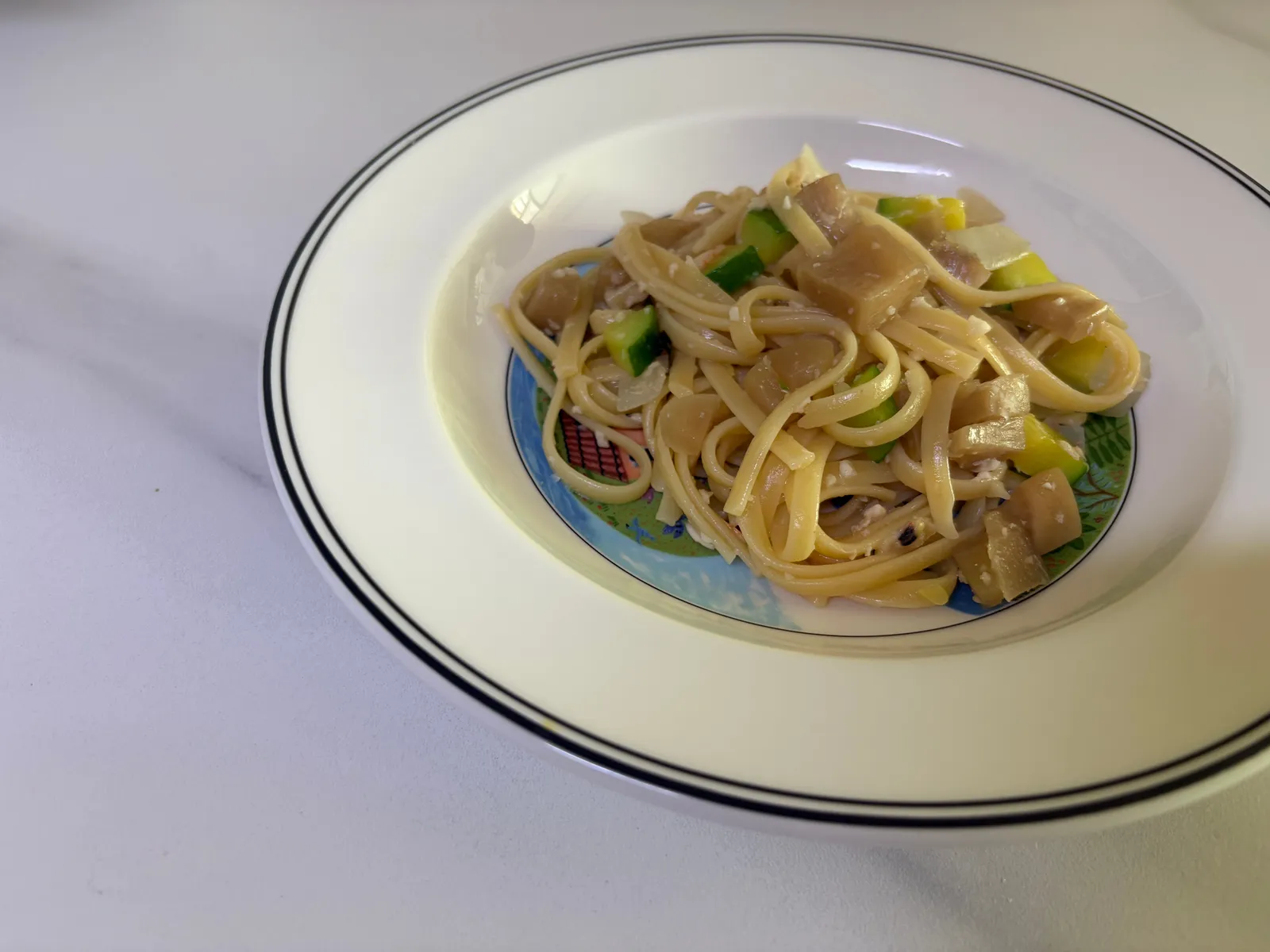
This aged radish kimchi pasta is what I made one morning with radish kimchi that had fermented too far to eat on its own. I soaked it in water for 2 days to draw out the salt, then made a quick kimchi pasta stir-fry with shrimp paste, garlic and whatever vegetables I had. It took about 15 minutes and I ate it with a cup of warm coffee.
This Korean kimchi pasta is not a dish I planned. It came from not wanting to throw away kimchi that still had good flavor in it.
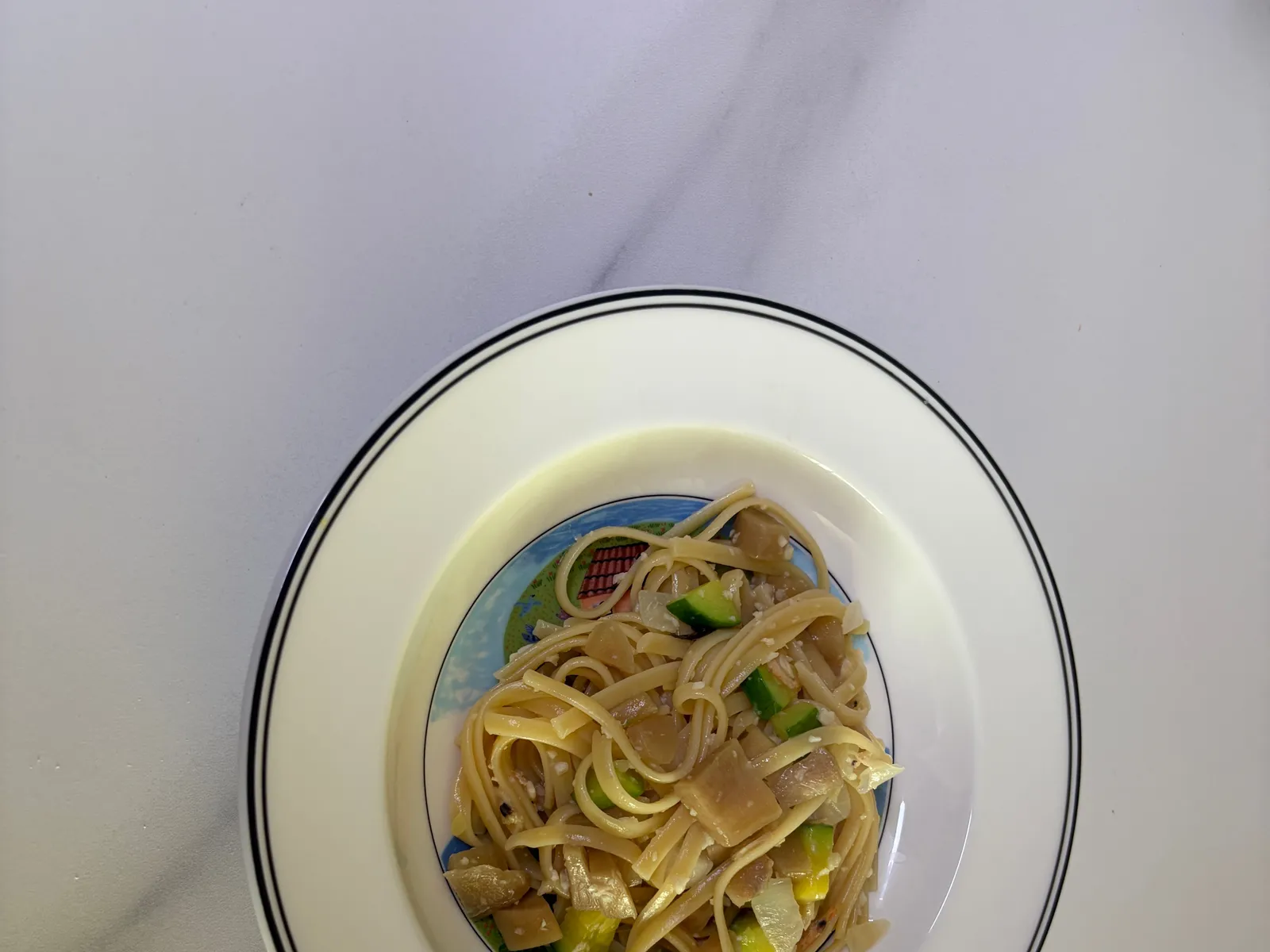
What over-fermented kimchi tastes like
Kimchi keeps fermenting in the fridge. After several months it can become very sour and salty — too strong to eat as a side dish.
I had a batch of radish kimchi my mom gave me last year. By the time I got around to it, the taste was sharp and the salt had concentrated. I did not want to throw it away, so I tried soaking it.
The 2-day soak
I put the radish kimchi in a bowl, covered it with fresh water and left it in the fridge. I changed the water once a day. After 2 days the flavor was much milder — still tangy and savory, but the sharpness was gone.
This is the same idea as soaking salted anchovies or dried fish before cooking. The water pulls out the extra salt and softens the more intense flavors.
Saeujeot and garlic as the base
I stir-fry saeujeot and minced garlic together before adding anything else. The garlic goes golden in the shrimp fat and the whole pan smells ready.
Saeujeot is salted fermented shrimp. In Korean cooking it is used as a seasoning the way fish sauce is used in Thai cooking. For this pasta it replaces both the oil and the salt of a standard aglio e olio.
The vegetables
I used zucchini and onion because that is what was in the fridge. Any vegetables you have work here. The kimchi and shrimp paste have enough flavor on their own; the vegetables add texture and bulk.
I cut the soaked radish kimchi into cubes and add it with the vegetables. Everything goes into the same pan and cooks until soft.
Finishing with olive oil
Once the pasta is tossed in, I plate it and drizzle olive oil over the top. The oil makes the noodles glossy and adds a gentle richness that works well with the fermented kimchi flavor.
Black pepper goes on last.
More from this kitchen
If you like pasta cooked with a Korean ingredient, the spaghetti stir fry with fish sauce comes together in about the same time. Another way to use kimchi at breakfast is the tomato kimchi jjigae. If you want to know what is on a pasta box, the durum wheat pasta guide explains the label.
Swaps and variations
- No aged radish kimchi? Regular kkakdugi works, but skip the 2-day soak and taste before adding any extra seasoning — it will be saltier.
- No saeujeot? Use a small amount of fish sauce instead, starting with 1 teaspoon.
- Use whatever vegetables are in the fridge. Zucchini and onion are what I had.
Make ahead and storage
This pasta is best eaten right away. I made it for breakfast and finished it in one sitting.
Aged Radish Kimchi Pasta with Shrimp Paste (15 Minutes)
Ingredients
- 1 serving wide pasta noodles (a bundle about the width of a 100-won coin)
- Over-fermented radish kimchi (kkakdugi or chonggak kimchi), soaked 2 days, cubed
- 2 teaspoons (10 ml) saeujeot (salted fermented shrimp)
- 3 teaspoons (15 ml) minced garlic
- Zucchini, cut into chunks, as much as you like
- Onion, cut into chunks, as much as you like
- Olive oil to finish
- Black pepper to finish
Instructions
- Two days ahead: put the radish kimchi in a bowl, cover with fresh water and refrigerate. Change the water once a day. This draws out most of the salt and softens the sour taste.
- Bring a pot of water to a boil and cook the pasta until just done. Drain and set aside.
- While the pasta cooks, add the saeujeot and minced garlic to a pan over medium heat. Stir-fry until the garlic is fragrant and lightly golden.
- Drain the soaked radish kimchi and cut into cubes. Add to the pan along with the zucchini and onion.
- Stir-fry until the vegetables are cooked through.
- Add the drained pasta and toss everything together until the noodles are coated.
- Plate and drizzle with olive oil. Finish with black pepper.
Questions
Why soak the radish kimchi in water for 2 days?
Over-fermented kimchi can be very salty and sour. Soaking in fresh water for 2 days draws out the extra salt so the kimchi tastes milder and works well in a cooked dish.
Can I make this with fresh kimchi instead of aged kimchi?
Yes, but skip the 2-day soak. Fresh or mildly fermented kimchi is already well-seasoned. Taste as you go and adjust the saeujeot.
What does saeujeot do in this pasta?
Saeujeot is salted fermented shrimp. It seasons the garlic base the way fish sauce or anchovy would in a classic aglio e olio. The taste is salty and savory with a faint seafood depth.
What pasta shape works best?
I used a wide flat noodle because that is what I like. Any pasta shape works. A longer noodle wraps around the kimchi pieces well.
Is this the same as kimchi aglio e olio?
Very close. The base is garlic cooked in fat (here saeujeot instead of olive oil), and the kimchi brings its own fermented sour-salty flavor. I finish with a drizzle of olive oil, which is the same last step.