Spaghetti Stir Fry with Fish Sauce in 20 Minutes
Spaghetti stir fry with ginger, chili, garlic, fish sauce, oyster sauce and bean sprouts. Any vegetables work. 20 minutes, one big serving.
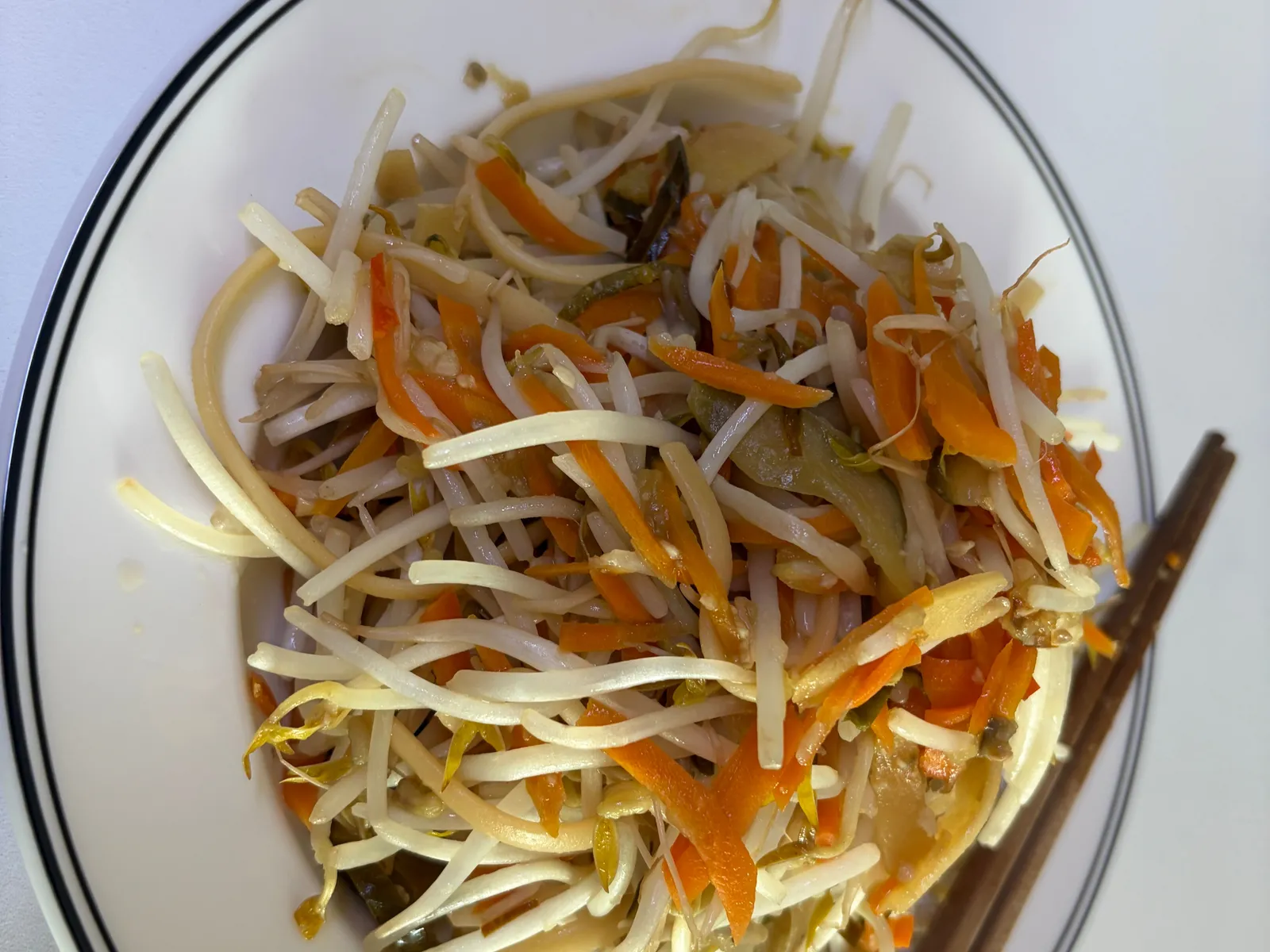
This spaghetti stir fry tastes like Southeast Asian fried noodles: ginger, chili and garlic in hot oil, then fish sauce and oyster sauce, then a big handful of bean sprouts. It takes about 20 minutes and makes 1 generous serving, and you can use whatever vegetables are in your fridge.
I made this one morning when I woke up hungry and wanted stir-fried noodles. I used regular spaghetti from the cupboard instead of Asian noodles, and I ate two bowls.
Why spaghetti works for a pasta stir fry
Most dried spaghetti is made from durum wheat, the hardest kind of wheat, ground into semolina. Durum pasta stays firm after boiling, so it can be tossed around in a hot pan with sauce without breaking up or turning soft. That is exactly what a stir-fry noodle needs to do.
It is also the noodle most kitchens already have. If you keep a box of spaghetti, you can make Asian spaghetti like this any morning without a trip to an Asian grocery store. I wrote more about it in what durum wheat is and why I use pasta for stir-fry noodles.
The Southeast Asian base: ginger, chili and garlic
The flavor starts in the oil. Chop fresh ginger, a fresh chili and garlic finely and stir-fry them in a generous amount of oil until they smell fragrant and just begin to soften. Do not rush this step; everything that goes into the pan afterward picks up this flavor.
Then come the two sauces. Fish sauce goes in first and gives the noodles their salty, savory, Southeast Asian taste. Oyster sauce follows and makes the sauce cling to the pasta in a glossy coat. I do not measure them; I add some, toss, taste and add more. If you have never cooked with fish sauce, about 1 tablespoon of each is a common place to start.
Use any vegetables in your fridge
This is a vegetable stir fry noodles dish, so the vegetables matter more than the exact list. I like a lot of vegetables in my noodles. This time I used carrot, mushrooms, onion, eggplant and dried sweet persimmon, because that is what I had.
The carrots were already cooked. I shred carrots and cook them in plain water, with no oil or salt, then keep them in the fridge. When a dish turns out too salty or needs more vegetables, I add a handful. They are already soft, so they only need to warm through. It is the same idea as my steamed Korean vegetables made with just water.
Dried persimmon for a little sweetness
The fruit in this stir fry is dried sweet persimmon, cut into strips. We have a lot of dried persimmon at home, so it goes into many things. In this pasta stir fry it adds a mild, chewy sweetness that balances the fish sauce, a bit like the palm sugar in many Southeast Asian noodle dishes.
If you have no dried persimmon, leave it out or use another dried fruit. I use dried apple the same way in my tomato kimchi jjigae.
Bean sprouts last, olive oil on top
Bean sprouts go in at the very end. Toss them for a few seconds, just until glossy, and take the pan off the heat. Bean sprout noodles are best when the sprouts still snap. In the photo you can see they are still white.
The last step happens at the table. I drizzle plenty of olive oil over the bowl before eating. It sounds unusual for an Asian-style noodle, but with plenty of olive oil on top, this bowl was really delicious. Use an olive oil you like the taste of. If you are not sure which bottle to buy, here is how to choose olive oil. To see what extra virgin, olive oil and light mean on the label, here are the olive oil grades in one chart.
A big breakfast
I eat my biggest meal in the morning and keep dinner light. So noodles for breakfast, and two bowls of them, are normal at my table. Make as much as you want: more pasta if you are hungry, more vegetables if you like them as much as I do.
If you like pasta cooked like a stir fry, try my aged radish kimchi pasta next. It is another quick breakfast noodle dish made with what was already in the kitchen.
How it fits a Mediterranean-style plate
- Olive oil
- Vegetables or fruit
- Whole grains
- Beans or lentils
- Fish or seafood
- Nuts or seeds
Swaps and variations
- No fish sauce? Use soy sauce. The stir fry will taste more like Chinese lo mein and less Southeast Asian.
- Use any vegetables in your fridge. Cabbage, zucchini, bell pepper and spinach all work in a vegetable stir fry noodles dish like this one.
- No dried persimmon? Leave it out, or add a few strips of dried apple or a pinch of sugar for the same hint of sweetness.
- Linguine or any long dried pasta works in place of spaghetti. Short pasta is fine too, it just eats less like noodles.
- Want protein? Fry an egg or add tofu or shrimp with the vegetables.
Make ahead and storage
Spaghetti stir fry is best eaten right away, while the bean sprouts are still crunchy. Leftovers keep in a covered container in the fridge for up to 2 days; reheat in a hot pan with a splash of water. To get ahead, shred and cook the carrots the night before, or keep a box of water-cooked carrots in the fridge as I do.
Spaghetti Stir Fry with Fish Sauce in 20 Minutes
Ingredients
- Long pasta such as spaghetti, as much as you want to eat
- 1 small knob fresh ginger, finely chopped
- Garlic, finely chopped
- 1 fresh chili, finely chopped (more if you like heat)
- Cooking oil, enough to coat the pan generously
- Carrot, shredded (I use carrots I cooked ahead in plain water)
- Mushrooms, sliced
- Onion, sliced
- Eggplant, sliced
- Dried sweet persimmon, cut into strips (optional)
- Fish sauce, to taste (about 1 tablespoon / 15 ml is a common starting point)
- Oyster sauce, to taste (about 1 tablespoon / 15 ml is a common starting point)
- A big handful of bean sprouts
- Olive oil to finish, as much as you like
Instructions
- Bring a pot of water to a boil and cook the spaghetti until just tender. Drain it and keep it close to the stove.
- While the pasta cooks, pour a generous amount of oil into a large pan over medium heat. Add the chopped ginger, chili and garlic and stir-fry until fragrant and just starting to soften.
- Add the vegetables: carrot, mushrooms, onion, eggplant and dried persimmon, or whatever you have. Stir-fry until the onion and eggplant are soft.
- Add the drained spaghetti and toss it with the vegetables for a minute or two.
- Add the fish sauce and toss, then add the oyster sauce and toss again until every strand is coated. Taste and add more of either if you want it saltier.
- Add the bean sprouts last. Stir-fry briefly, just until they turn glossy, so they stay crunchy.
- Serve in a bowl and drizzle with plenty of olive oil before eating.
Questions
Can you use spaghetti for stir fry?
Yes. Spaghetti is a good stand-in for stir-fry noodles. Most spaghetti is made from durum wheat semolina, so it stays firm when you toss it in a hot pan with sauce. Cook it until just tender, drain it, and add it to the pan after the vegetables.
What sauce goes in this Asian spaghetti?
This Asian spaghetti uses two sauces: fish sauce for a salty, savory Southeast Asian taste and oyster sauce for a slightly sweet, glossy coating. Add the fish sauce first, toss, then add the oyster sauce.
Does fish sauce pasta taste fishy?
No. Fish sauce pasta does not taste like fish once the sauce hits a hot pan. Fish sauce works like salt with extra depth, and with the ginger, garlic and chili it tastes savory rather than fishy.
When do you add bean sprouts to stir-fried noodles?
Add bean sprouts at the very end. Bean sprout noodles taste best when the sprouts are just warmed through and still crunchy, which takes less than a minute in a hot pan.
Are noodles a good breakfast?
In much of Asia, breakfast noodles are ordinary, from noodle soups to fried noodles. A pasta stir fry with plenty of vegetables makes a hot, hearty breakfast for mornings when you wake up hungry.