How to Choose Olive Oil: Grade, Dates, Bottle, Smoke Point
How to choose olive oil at any store: extra virgin vs olive oil, harvest and best-by dates, dark bottles, and whether you can cook with it.
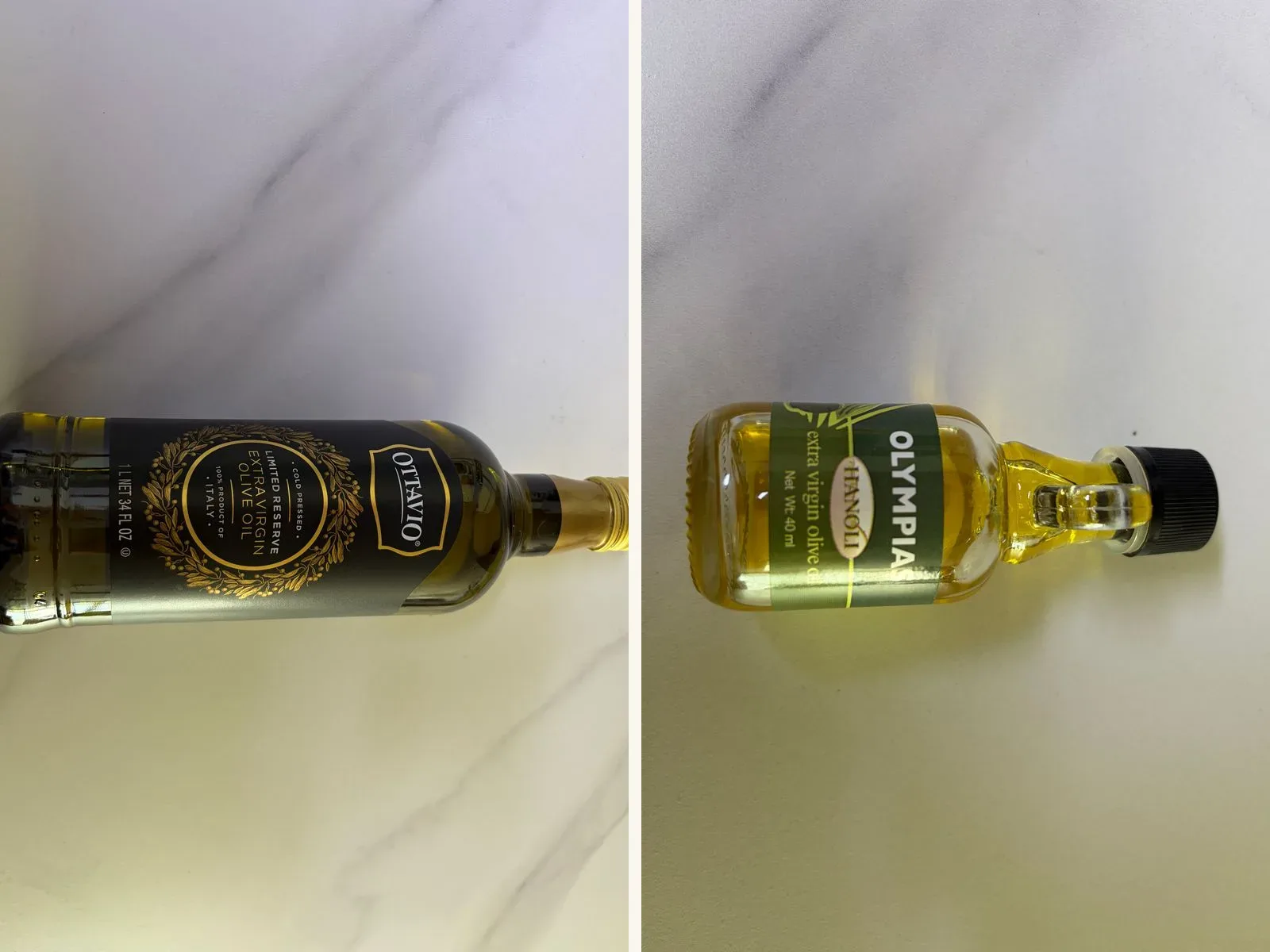
How to choose olive oil comes down to five things on the bottle: the grade, the dates, the bottle itself, the size and the origin. I did not know any of this. The two bottles in my kitchen right now were bought without thinking: a big dark bottle from Costco, because it was there, and a tiny clear one I grabbed in a hurry on a business trip to Vietnam.
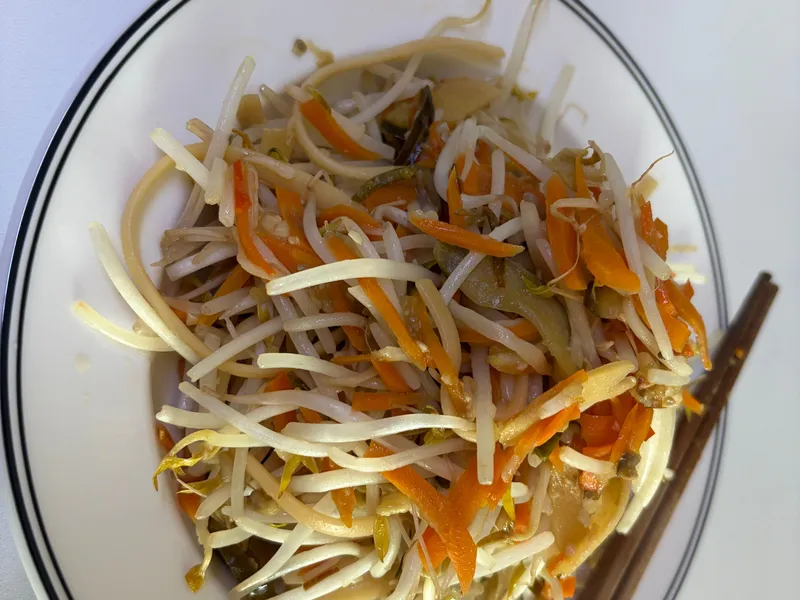
I put a lot of olive oil on my food, like the spaghetti stir fry with fish sauce I drizzle with olive oil at the table. So I looked up how to choose olive oil, using the two bottles I already had as examples.
The two bottles I already had
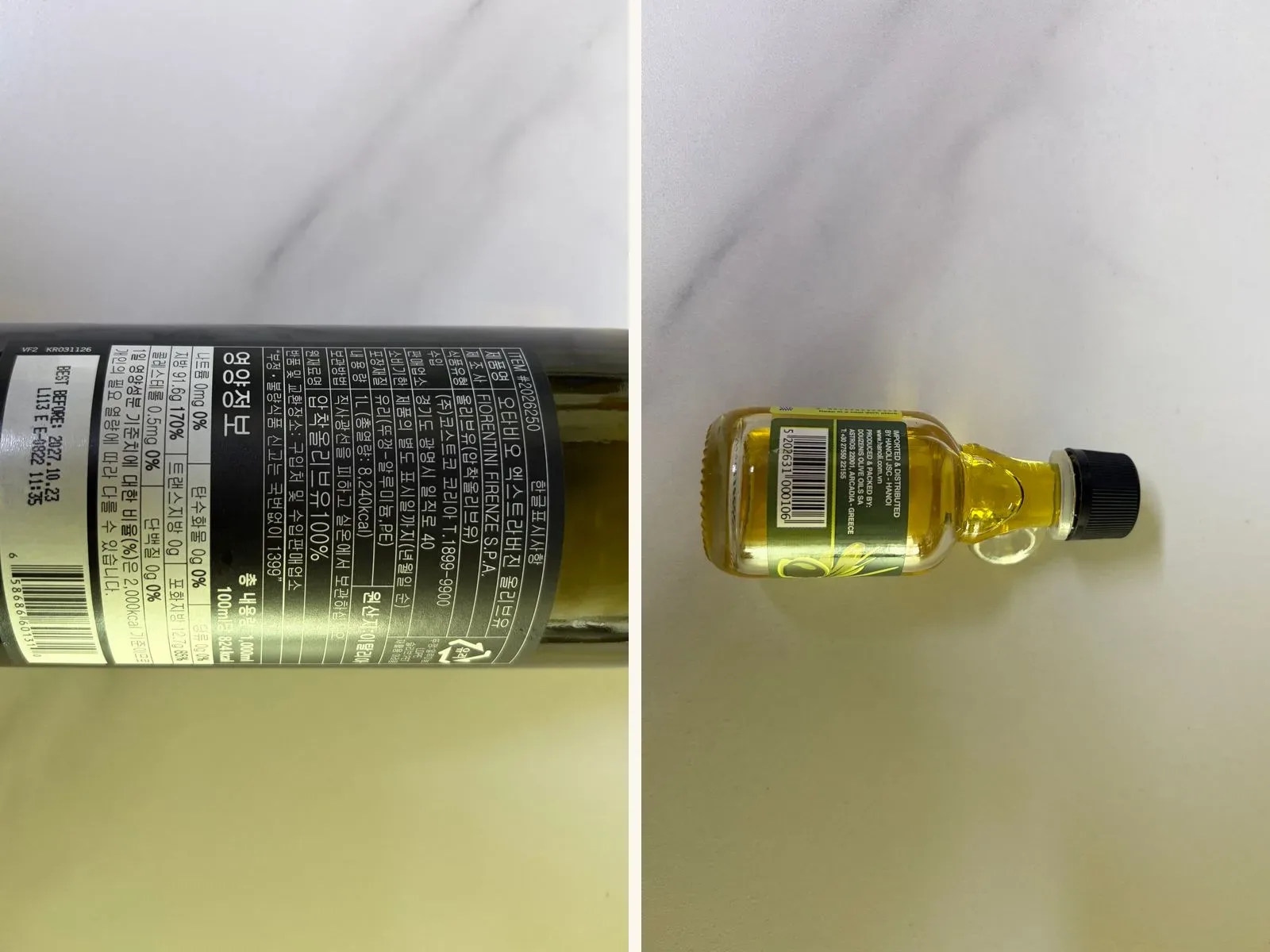
The big one is Ottavio Limited Reserve Extra Virgin Olive Oil, 1 liter, which I bought at Costco in Korea. The front says "cold pressed" and "product of Italy." It comes in dark green glass. The Korean back label lists one ingredient, pressed olive oil, and a best-before date of October 23, 2027. There is no harvest date.
The small one is Olympias extra virgin olive oil, 40 ml, which I bought in Vietnam. The back says it was produced and packed in Arcadia, Greece, and imported by a company in Hanoi. It is in clear glass and says "Keep in a cool dark place." No date shows on the parts of the label I photographed.
1. Check the grade: extra virgin vs olive oil
The North American Olive Oil Association (NAOOA) splits olive oil into two basic categories: virgin and refined. Extra virgin is the top virgin grade. It is made only by pressing olives, with no refining, and it keeps the most olive flavor.
A bottle labeled simply "olive oil" is a different grade. The NAOOA defines it as a blend of mostly refined olive oil with some virgin oil added. Stores also sell it as "pure" or "classic" olive oil.
Light or light-tasting olive oil is not its own grade; it is olive oil made with very little virgin oil, so it tastes more neutral. "Light" describes the flavor, not the calories. The NAOOA notes that all olive oils have the same number of calories.
| Label | What is in the bottle | Taste |
|---|---|---|
| Extra virgin olive oil | Pressed olive oil only, top grade | Strongest olive flavor |
| Virgin olive oil | Pressed olive oil only, lower grade | Olive flavor, milder |
| Olive oil, pure, classic | Mostly refined oil plus some virgin oil | Mild |
| Light or light-tasting | Refined oil with very little virgin oil | Neutral |
Both of my bottles say extra virgin on the front. If you want the oil to taste like olives when you drizzle it, this is the word to look for. For the full ladder, including pomace and lampante, see my olive oil grades chart.
2. Look for a harvest date, or the best-by date
Olive oil does not get better with age. A newer oil tastes fresher. Two dates can tell you how old it is, and the experts do not quite agree on which matters more.
UC Davis suggests looking for a harvest date, as opposed to the best-by date. Most olive oils in California and Europe are harvested from October to December, and Southern Hemisphere oils mostly from May to July. Its advice is to choose the most recent harvest and use the oil within 15 to 18 months of it.
The NAOOA points out that a harvest date tells you when the olives were picked, not when the oil was bottled. It requires its member brands to print a best-by date but not a harvest date, and says most oils keep their quality for up to two years from bottling.
In practice: if the bottle has a harvest date, pick the most recent one. If it only has a best-by date, as my Costco bottle does, pick the one furthest in the future.
3. Choose a dark bottle and store it away from light
Light, heat and air make olive oil lose its freshness faster. UC Davis says to store it in a cool, dark place, and the NAOOA says olive oil starts to degrade once it is opened and exposed to light, heat and oxygen.
That is why so much good olive oil comes in dark glass or tins. My Costco bottle is dark green. My bottle from Vietnam is clear, and its own label asks you to keep it somewhere cool and dark. At 40 ml it will be gone soon, but a large clear bottle sitting next to a sunny window is the one to skip.
At home, keep the bottle in a cupboard, not next to the stove.
4. Buy a size you will finish quickly
A big bottle is cheaper per liter, but only if you finish it while it still tastes good. The NAOOA suggests buying bottles you will finish within two to three months. UC Davis says to use olive oil within a couple of months after opening.
Our family goes through about 2 liters of olive oil in two months, so a 1 liter bottle is gone in about a month and stays well inside that window. If you only use a spoonful now and then, a smaller bottle is the better buy.
5. Read where the olives were grown
The front of a bottle can show one country while the olives came from several. The NAOOA suggests checking the back label for the country or countries of origin. My Costco bottle says product of Italy on the front, and the Korean import label lists Italy as the origin. My small bottle names the Greek producer and the region, Arcadia.
Quality seals help too. The NAOOA Certified seal means the brand is part of a program of random tests of bottles taken off store shelves. UC Davis mentions seals such as the California Olive Oil Council's.
Can you cook with extra virgin olive oil? The smoke point
I had heard that olive oil has a low smoke point, so I only drizzle it on after cooking. It turns out that is only partly true.
The NAOOA gives extra virgin olive oil a smoke point range of 350 to 410°F, about 177 to 210°C, and refined olive oil and light-tasting olive oil 390 to 470°F, about 199 to 243°C. Average stovetop cooking is about 350°F, about 177°C, which is inside both ranges. The NAOOA lists sautéing, grilling, roasting, baking and pan frying as uses for extra virgin olive oil, and says an oil's stability matters more than its smoke point.
So yes, you can cook with extra virgin olive oil. I still like adding it at the end of a stir fry, because then you taste it. If you want a neutral taste for frying, refined olive oil is the milder choice, and the extra virgin can go on at the table.
My olive oil checklist
- Grade: extra virgin for drizzling and salads; plain olive oil for frying if you want a milder taste
- Date: the newest harvest date, or the furthest best-by date
- Bottle: dark glass or a tin
- Size: what you can finish in two to three months
- Origin: the country or countries on the back label
For what each phrase on the back of a bottle means, from cold pressed to the lot number, see my guide on how to read an olive oil label.
If you have spaghetti in the cupboard, try my what is durum wheat guide next. It explains why pasta works so well as a stir-fry noodle.
Questions
How do you choose a good olive oil?
Start with the grade: extra virgin is the unrefined top grade. Then look for a harvest date or a best-by date as far away as possible, a dark glass bottle or tin, a size you can finish within a few months, and the country where the olives were grown.
What is the difference between extra virgin olive oil and olive oil?
Extra virgin olive oil is made only by pressing olives, with no refining. A bottle labeled just olive oil, also sold as pure or classic, is a blend of mostly refined olive oil with some virgin oil added. It tastes milder and has a slightly higher smoke point.
Can you cook with extra virgin olive oil?
Yes. The North American Olive Oil Association gives extra virgin olive oil a smoke point range of 350 to 410°F, about 177 to 210°C, and says average stovetop cooking is about 350°F. It lists sautéing, roasting, baking and pan frying as uses.
Is light olive oil lower in calories?
No. Light or light-tasting olive oil is lighter in flavor, not in calories. It is a refined olive oil with very little virgin oil added. The North American Olive Oil Association says all olive oils contain the same number of calories.
Should I look for a harvest date or a best-by date?
Both help. UC Davis suggests looking for a harvest date and using the oil within 15 to 18 months of it. The North American Olive Oil Association points out that the harvest date is not the bottling date and treats the best-by date as the more reliable guide. If only one is printed, use that one.