Avocado Egg Bibimbap with Soy Sauce (20 Minutes)
Bibimbap with avocado, a soft-fried egg and soy sauce instead of gochujang. Vegetables simmered in plain water, no stir-frying. Serves 1.
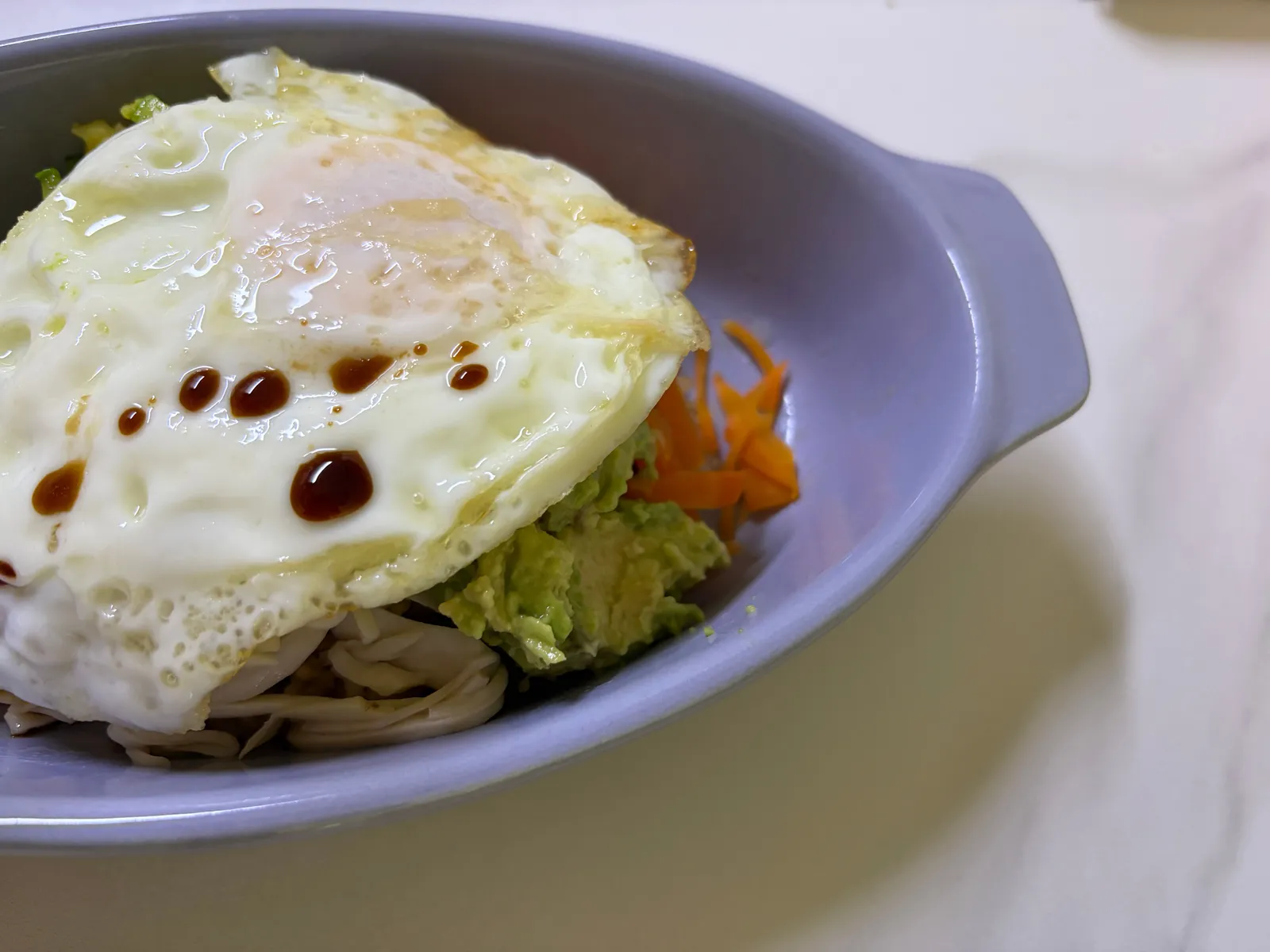
This bibimbap uses soy sauce instead of gochujang, so it is milder than the classic Korean bibimbap recipe. I top warm rice with vegetables simmered in plain water, sliced avocado and a soft-fried egg, then drizzle Vietnamese soy sauce over the whole bowl. It takes about 20 minutes.
This avocado egg bibimbap is a no-gochujang bibimbap I make when I want something lighter for breakfast.
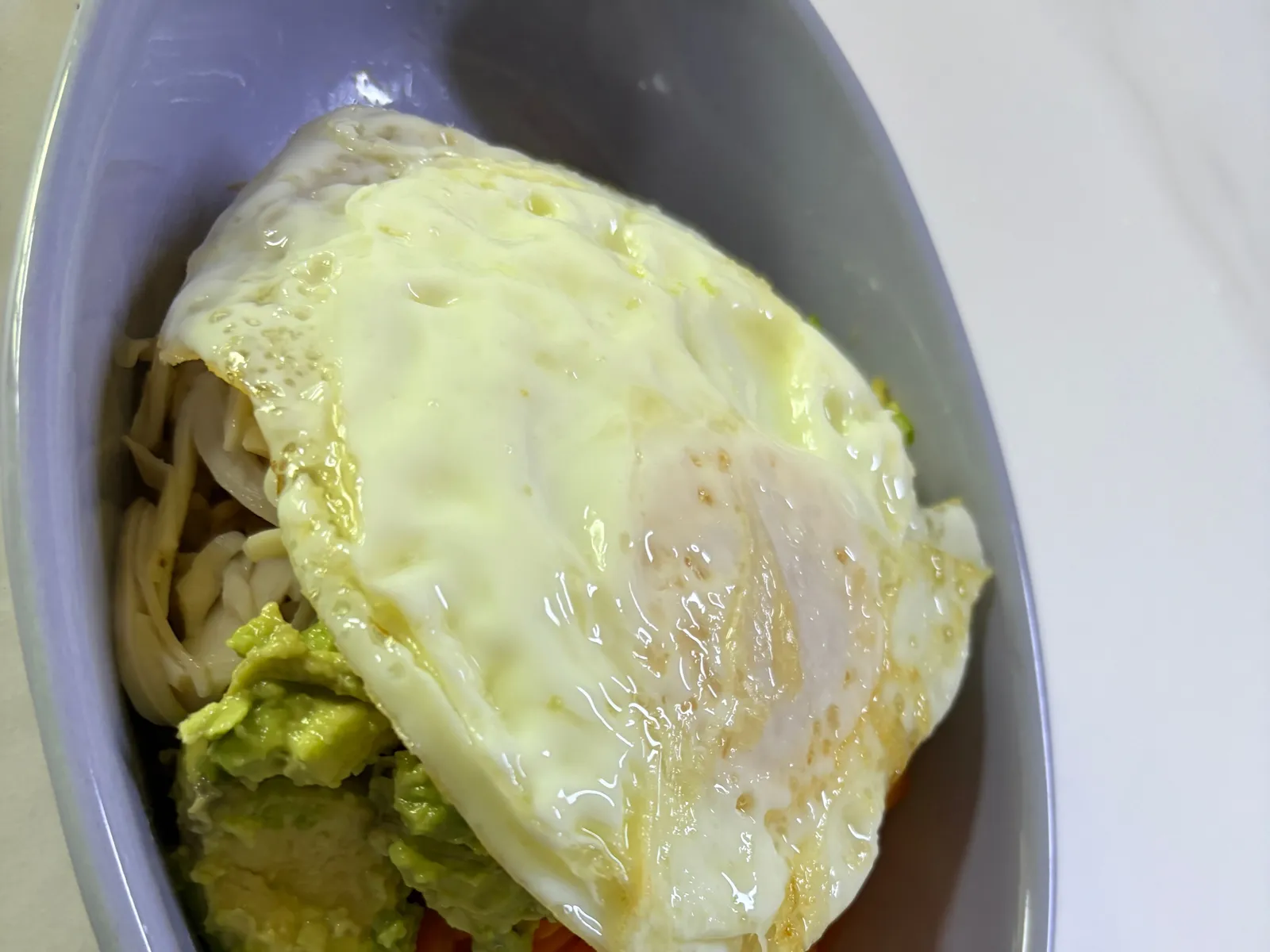
Soy sauce instead of gochujang
Bibimbap is usually served with gochujang, the red pepper paste that gives it heat and a thick coating on every ingredient. Soy sauce gives a milder result. Each ingredient keeps its own flavor.
I use Vietnamese soy sauce because that is what I keep at home. It is a little lighter and sweeter than the soy sauce I grew up using. Any light soy sauce works the same way.
Vegetables simmered in water
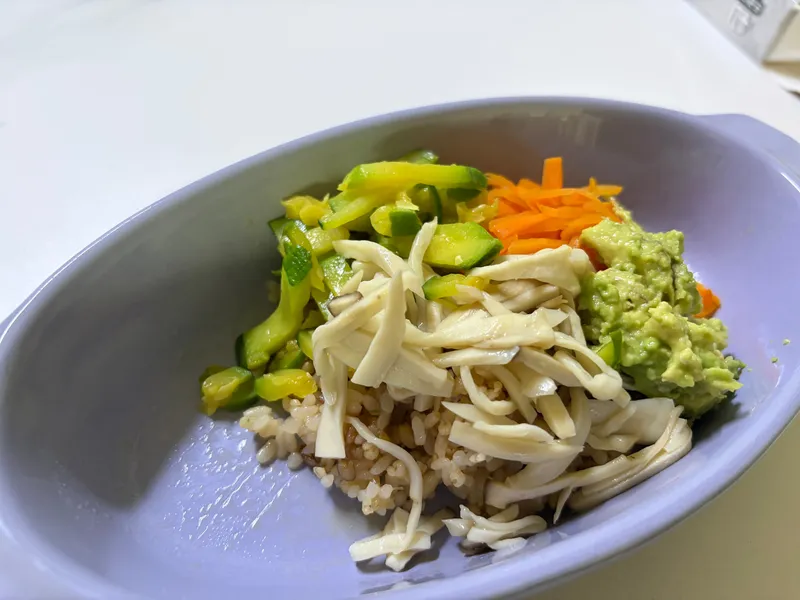
I simmer the carrot, mushrooms and zucchini in plain water instead of stir-frying. A small saucepan, just enough water to cover, medium heat for about 5 minutes. Drain and they are ready.
No oil, one pan, same result. For an easy bibimbap in the morning, that matters.
Avocado in bibimbap
Avocado is not a traditional bibimbap ingredient. I add it because the soft, buttery texture works well next to warm vegetables and rice. If you do not have avocado, leave it out or add more of another vegetable.
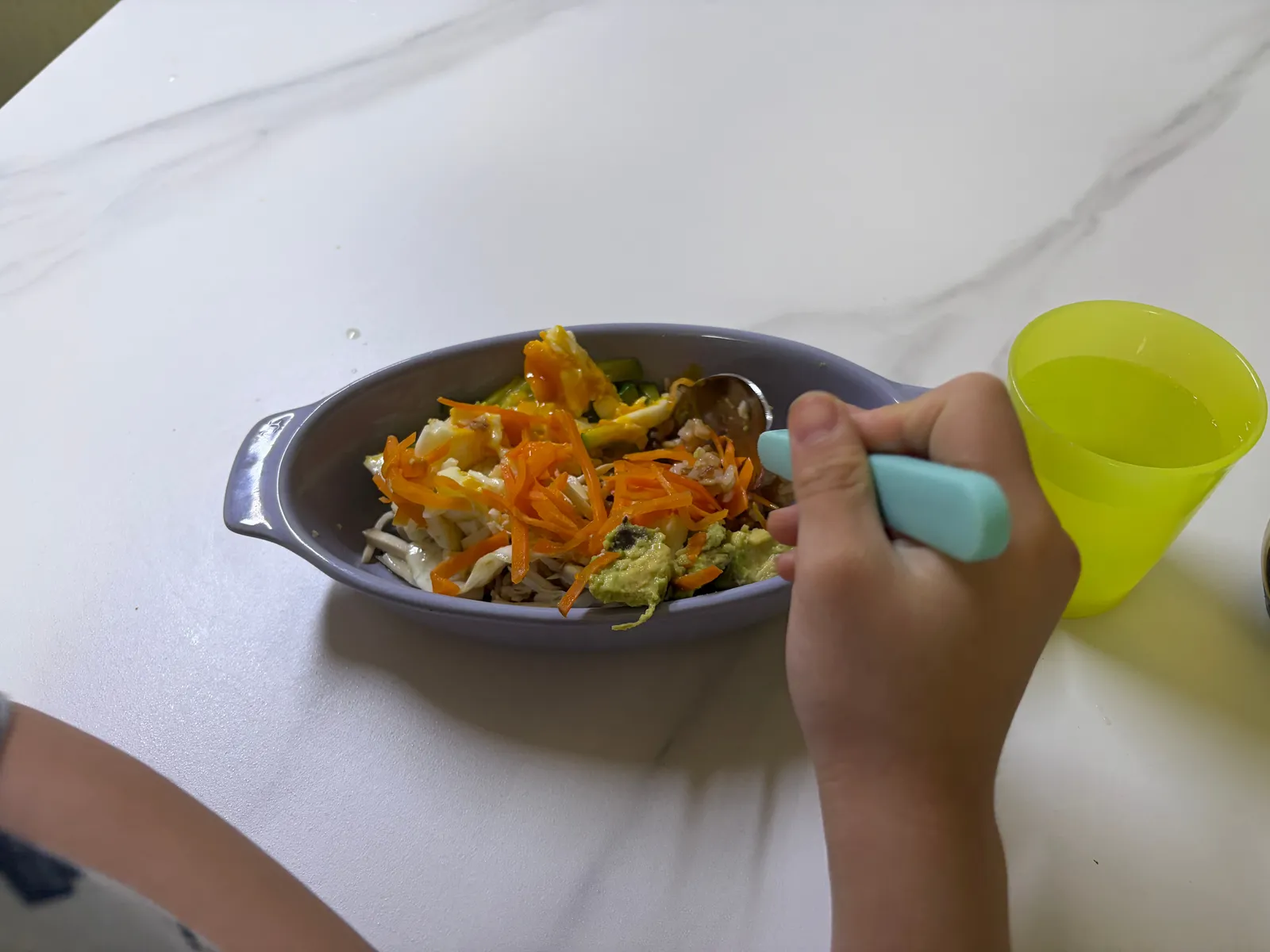
Mixing the bowl
The egg goes on last, before the soy sauce. Then everything gets mixed together just before eating. In Korean, bibimbap means a mixed rice dish — bibim is to mix, bap is rice. Mixing is the last step.
What to eat with this bibimbap
This bowl is a full meal on its own. The rice, egg and avocado give it enough substance for a proper breakfast. I sometimes eat it with a small bowl of miso soup or a cup of warm tea on the side.
If you want something extra, a few slices of Korean pickles (kkakdugi or oi muchim) add a cold, crunchy contrast to the warm rice. I do not always have them, but the bibimbap is complete either way.
About bibimbap as a breakfast
Bibimbap is usually thought of as lunch or dinner in Korea, but warm rice with vegetables and an egg is a standard Korean breakfast too. The difference from a lunch version is portion size and how much sauce goes on. For breakfast I keep the soy sauce light so the bowl is not too heavy first thing in the morning.
This easy bibimbap with soy sauce takes the same 20 minutes as making eggs and toast.
More from this kitchen
The vegetables here are simmered in plain water, the same method as the Korean steamed vegetables. For a cold, crunchy side, try the oiji pickles. The Korean breakfast guide shows what else a Korean home breakfast can include.
Swaps and variations
- No Vietnamese soy sauce? Regular soy sauce works. Start with a small amount and add more to taste.
- No avocado? Leave it out or add more of a vegetable you have.
- Any vegetables work here. Use what is in the fridge.
Make ahead and storage
This bibimbap is best eaten right away. The avocado will brown if left sitting.
Avocado Egg Bibimbap with Soy Sauce (20 Minutes)
Ingredients
- 1 bowl cooked rice
- 1 egg
- Half an avocado, sliced
- Carrot, shredded
- Mushrooms, sliced
- Korean zucchini, sliced
- Vietnamese soy sauce (or any light soy sauce), to taste
Instructions
- Put the shredded carrot, mushrooms and zucchini in a small saucepan. Add just enough water to cover and simmer over medium heat until cooked through, about 5 minutes. Drain.
- While the vegetables cook, fry the egg over medium-low heat until the white is set and the yolk is still slightly soft.
- Put the warm rice in a bowl. Arrange the cooked vegetables on top.
- Add the sliced avocado.
- Place the fried egg on top.
- Drizzle Vietnamese soy sauce over everything to taste.
- Mix everything together in the bowl just before eating.
Questions
Why use soy sauce instead of gochujang in bibimbap?
Gochujang is the classic bibimbap sauce and adds heat and a thick coating on every ingredient. Soy sauce makes a milder, cleaner-tasting bowl. If you want no gochujang bibimbap, soy sauce is the simplest swap.
What is Vietnamese soy sauce?
Vietnamese soy sauce is lighter and slightly sweeter than Chinese soy sauce. Any light soy sauce works in this recipe.
Why simmer vegetables in water instead of stir-frying for this korean bibimbap recipe?
Simmering in plain water takes about the same time as stir-frying and uses no oil. The vegetables taste clean and light. For a quick easy bibimbap at breakfast, not heating a pan of oil is one less step.
Can I use cold rice for bibimbap?
Warm rice is better. Cold rice changes the texture of the whole bowl. If using leftover rice, reheat it first.
Is this a traditional bibimbap recipe?
No. Traditional bibimbap uses gochujang and sesame oil. This avocado egg bibimbap is a milder home version with soy sauce.