Korean Breakfast: 5 Foods Koreans Actually Eat, with Recipes
What Koreans eat for breakfast, based on two surveys: rice and soup, eggs, street toast, nurungji and misutgaru. Each one comes with a simple recipe.
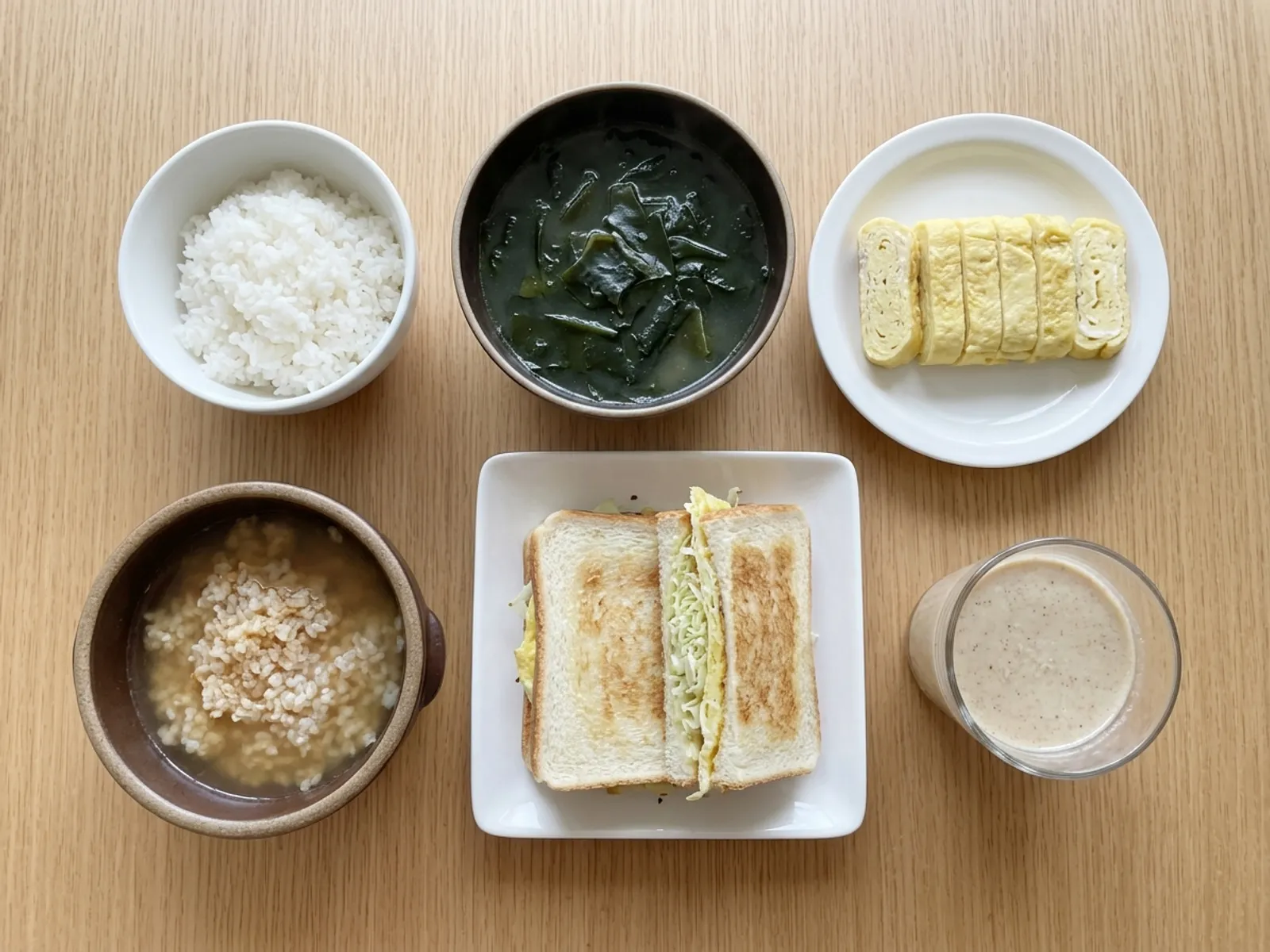
Image generated with AI to illustrate this guide.
A Korean breakfast is usually rice. In a 2024 survey, 45.0% of Korean adults said rice is what they mainly eat in the morning, and bread, porridge and grain drinks came next. Here are five breakfast foods Koreans actually eat, each with a simple recipe.
| Korean breakfast | What it is | Survey number |
|---|---|---|
| Rice and soup | Rice with miyeok guk, a seaweed soup | Rice: 45.0% |
| Eggs | Gyeran mari, a rolled omelet | Eggs: 29.4% of photos |
| Street toast | Egg and cabbage toast | Bread or sandwiches: 15.1% |
| Nurungji | Scorched rice boiled in water | Porridge or nurungji: 12.3% |
| Misutgaru | Roasted grain powder drink | Grain powder drinks: 5.9% |
How I chose these five
I looked for a survey of the foods Koreans love most at breakfast and did not find a national one. So this list goes by what people actually eat.
Two sources gave me numbers. The Korea Rural Economic Institute surveyed 3,188 households in person in 2024 and asked adults what they mainly eat for breakfast. The percentages for rice, bread, porridge and grain powder come from that survey.
The egg number comes from Kellogg, which looked at 1,659 breakfast photos sent in by consumers, as Seoul Economic Daily reported in June 2026. Kellogg is a food company and the photos are not a national sample, so treat that one as a rough guide. I used it because the reported survey answers do not name eggs, and eggs were the most common food in the photos.
The recipes below are roughly how most people make these at home in Korea. There is no one fixed version, so taste as you go and add more soy sauce, a little sugar or more water until it suits you. The pictures are AI illustrations.
1. Rice and soup (bap and guk)
Rice was the top answer in the survey, at 45.0%. A rice breakfast looks like any other Korean meal: rice, soup and side dishes such as kimchi. Miyeok guk is the seaweed soup Koreans eat on birthdays, and you can make it the night before.
For a rice breakfast from my own kitchen, see my avocado egg bibimbap.
Miyeok guk with rice (serves 2, soak 20 minutes, cook 30 minutes)
- 0.5 ounce (about 15 g) dried miyeok seaweed
- 2 ounces (about 55 g) beef brisket or stew meat
- About 1 teaspoon (5 ml) minced garlic
- 2 teaspoons (10 ml) Korean soup soy sauce
- 1 teaspoon (5 ml) sesame oil
- 3⅓ cups (about 800 ml) water
- Salt and pepper, to taste
- 2 bowls cooked rice
- Soak the miyeok until soft, rinse it twice, drain and cut it into bite-sized pieces.
- Slice the beef thinly and mix it with half the soy sauce, the garlic and a pinch of pepper.
- Cook the beef in the sesame oil over medium-high heat until it is no longer red.
- Add the miyeok and the rest of the soy sauce and cook for 4 to 5 minutes.
- Add the water and bring it to a boil. Cover and simmer over medium-low heat for 20 to 30 minutes, then season with salt and pepper.
- Serve with the rice.
To your taste: add more soup soy sauce or salt if the soup seems mild.
Amounts are one third of the Korean Bapsang miyeok guk recipe.
2. Eggs (gyeran mari)
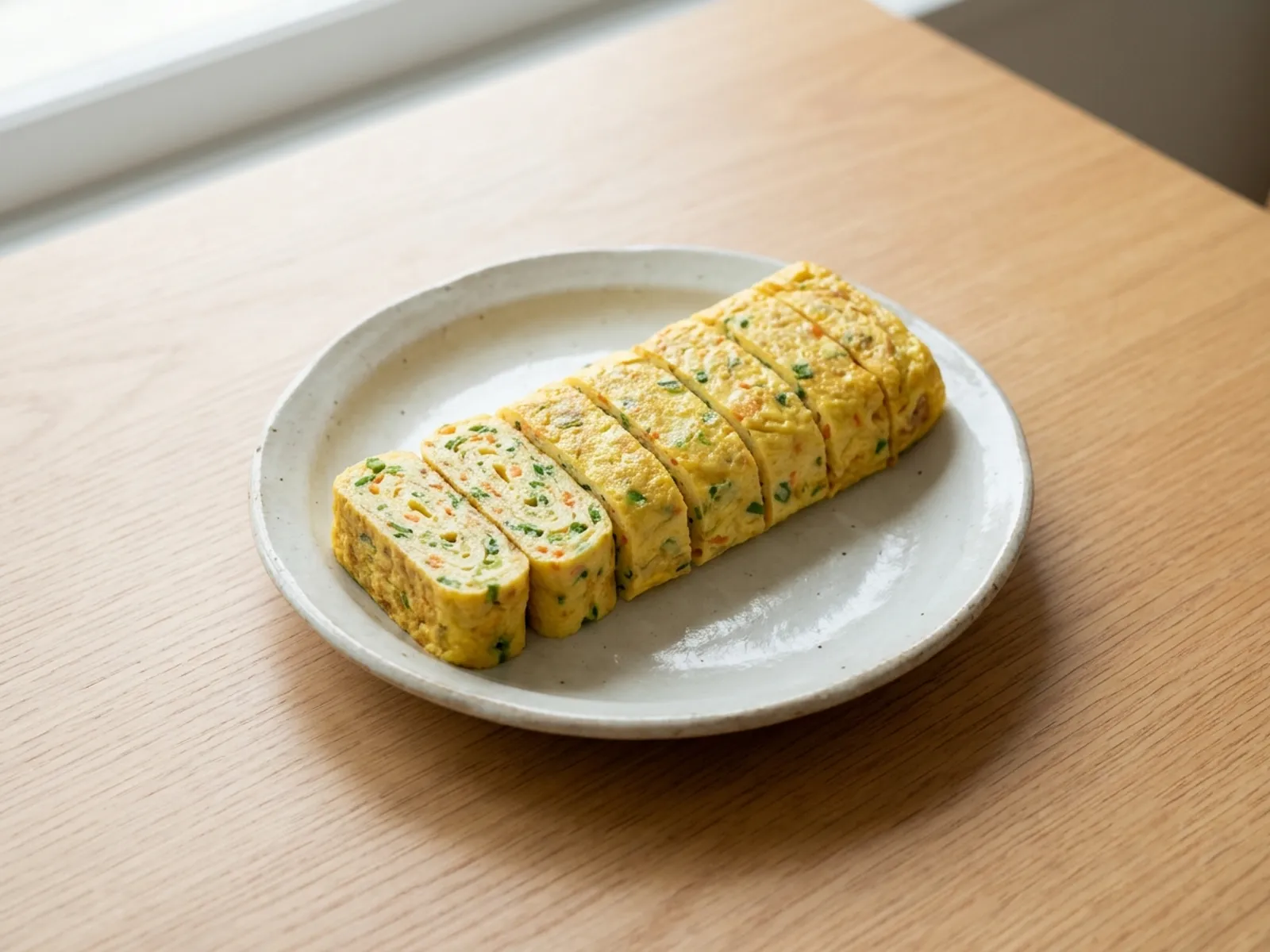
Image generated with AI to illustrate this dish.
Eggs were in 29.4% of the Kellogg breakfast photos, more than any other food. Gyeran mari is the rolled omelet you will find on Korean tables and in lunch boxes. You cook thin layers of egg and roll them up, then slice the roll.
Gyeran mari (serves 2)
- 3 large eggs
- 1 tablespoon (15 ml) finely chopped scallion
- 1 tablespoon (15 ml) finely chopped carrot
- A pinch of salt and black pepper
- 1 teaspoon (5 ml) vegetable oil
- Beat the eggs until the yolks and whites are fully mixed, then stir in the salt, pepper, scallion and carrot.
- Heat the oil in a nonstick pan over medium-low heat.
- Pour in half the egg and swirl it around the pan. When the top starts to set but is still wet, fold one end over and roll it to the far side.
- Pour the rest of the egg into the empty part of the pan. Let it set, then roll it up around the first roll.
- Cool for about 5 minutes and cut into 3/4-inch to 1-inch (2 to 2.5 cm) slices.
To your taste: add a little more salt, or a little sugar for a sweeter omelet.
Adapted from the Korean Bapsang gyeran mari recipe.
3. Korean street toast (gilgeori toast)

Image generated with AI to illustrate this dish.
Bread or sandwiches came second in the survey, at 15.1%. Korean street toast is the morning sandwich sold from street stalls. A thick omelet full of cabbage and carrot goes between buttered toast, with sugar and ketchup. It tastes sweet and salty at once.
Korean street toast (serves 1, 15 minutes)
- 2 slices bread
- 3 ounces (about 85 g) green cabbage, thinly sliced
- ½ small carrot, thinly sliced
- ¼ small onion, thinly sliced
- 1 small scallion, thinly sliced
- 1 large egg
- Salt and pepper, to taste
- 2 tablespoons (28 g) butter, divided
- Sugar and ketchup, to taste
- Melt some of the butter in a nonstick pan over medium heat and toast the bread until golden, 1 to 2 minutes per side.
- Set aside a small handful of the vegetables. Beat the rest with the egg and a pinch of salt.
- Melt more butter in the pan, shape the mixture into a large round and top with the reserved vegetables. Cook for about 3 minutes.
- Flip it, add more butter and cook for about 2 minutes.
- Put the omelet on one slice of toast, add sugar and ketchup, and close the sandwich.
To your taste: use more or less sugar and ketchup, or leave the sugar out.
Adapted from the Korean Bapsang gilgeori toast recipe.
4. Nurungji (scorched rice soup)
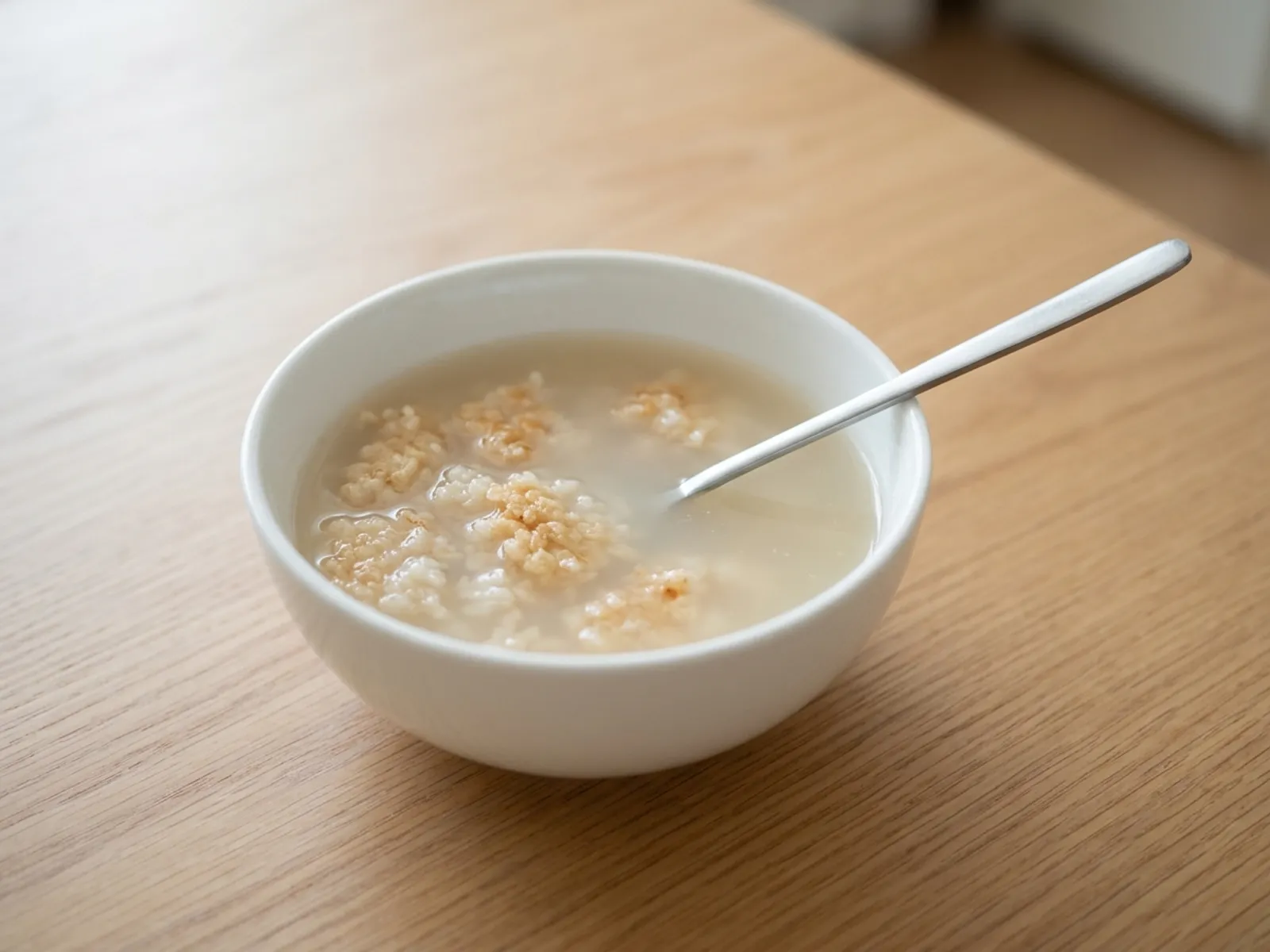
Image generated with AI to illustrate this dish.
Porridge and nurungji together came third in the survey, at 12.3%. Nurungji is the layer of rice that scorches onto the bottom of the pot. Boiled in water, it turns soft and tastes toasty. Korean grocery stores sell dried nurungji in packets, so you do not need a pot of scorched rice to start.
Nurungji soup (serves 1)
- Dried or homemade nurungji, as much as you want to eat
- Water, a little more than enough to cover the nurungji
- Put the nurungji in a pot and add water until it is a little more than covered.
- Bring it to a boil.
- Simmer until the grains are soft and the water turns cloudy and smells toasty. Packaged nurungji may list its own time, so check the bag.
To your taste: add more water for a thinner soup, or simmer longer for a softer one.
Method from Maangchi's nurungji recipe, which does not measure the water for the soup.
5. Misutgaru (roasted grain drink)

Image generated with AI to illustrate this dish.
Grain powder drinks took 5.9% of the survey, ahead of cereal at 4.2%. Misutgaru is a powder of cooked, roasted and ground grains and beans, and you stir it into a cold drink. It is the fastest breakfast on this list.
Misutgaru (serves 1)
- 1 cup (240 ml) water at room temperature
- 1½ tablespoons (22 ml) honey
- 3 tablespoons misutgaru powder
- 5 to 6 ice cubes
- Stir the honey into the water until it dissolves.
- Pour it into a bowl or wide glass and add the ice.
- Sprinkle the misutgaru on top and swirl a few times. Some powder can stay floating.
- Sip gently and do not breathe in, because the dry powder can make you cough.
To your taste: use more or less honey, or swap it for sugar.
Adapted from the Kimchimari misugaru recipe. For a creamier drink, the same recipe whisks about 3 tablespoons of powder with about 2½ teaspoons of sugar into 3/4 cup (180 ml) cold milk.
What to read next
If rice and side dishes are what you came for, start with the small things that go next to the bowl. My oiji recipe with dried cucumbers makes a salty Korean pickle, and steamed Korean vegetables go on top of warm rice.
If you want the egg and bread side of breakfast with Korean flavors, try my Korean tzatziki breakfast wrap.
Survey sources: Korea Rural Economic Institute, 2024 Food Consumption Behavior Survey, as reported by the Korean food trade paper Foodbank; Kellogg breakfast photo analysis, as reported by Seoul Economic Daily.
Questions
What do Koreans eat for breakfast?
Rice is the most common Korean breakfast. In a 2024 survey by the Korea Rural Economic Institute, 45.0% of adults said they mainly eat rice in the morning, followed by bread or sandwiches at 15.1% and porridge or nurungji at 12.3%.
Do Koreans really eat rice for breakfast?
Yes. Rice was the top answer in the 2024 Korea Rural Economic Institute survey, at 45.0% of adults. A rice breakfast is usually a bowl of rice with soup and a few side dishes, much like lunch or dinner.
What is a traditional Korean breakfast?
A traditional Korean breakfast is a bowl of rice and a bowl of soup with side dishes such as kimchi. Rice porridge and nurungji, a soup made from scorched rice, are Korean morning foods as well.
What is the most popular breakfast in Korea?
Rice is the most popular breakfast in Korea by what people say they mainly eat. In a separate Kellogg analysis of 1,659 breakfast photos, eggs appeared most often at 29.4%, ahead of rice at 24.4%, because eggs often sit beside rice or bread.
What is misutgaru?
Misutgaru is a Korean powder of cooked, roasted and ground grains and beans. You stir about 3 tablespoons into a cup of water or milk with a little honey to make a drink. Korean grocery stores sell it in bags.
Is Korean street toast sweet?
Korean street toast is both sweet and savory. The vegetable omelet inside is salted, then sugar and ketchup go on top before the second slice of bread. You can cut the sugar or leave it out.