Korean Salad Dressing With Olive Oil: 4 Easy Ratios
Korean salad dressing with olive oil: four ratios built on soy sauce, gochujang and toasted sesame oil, how much to use and how long each one keeps.
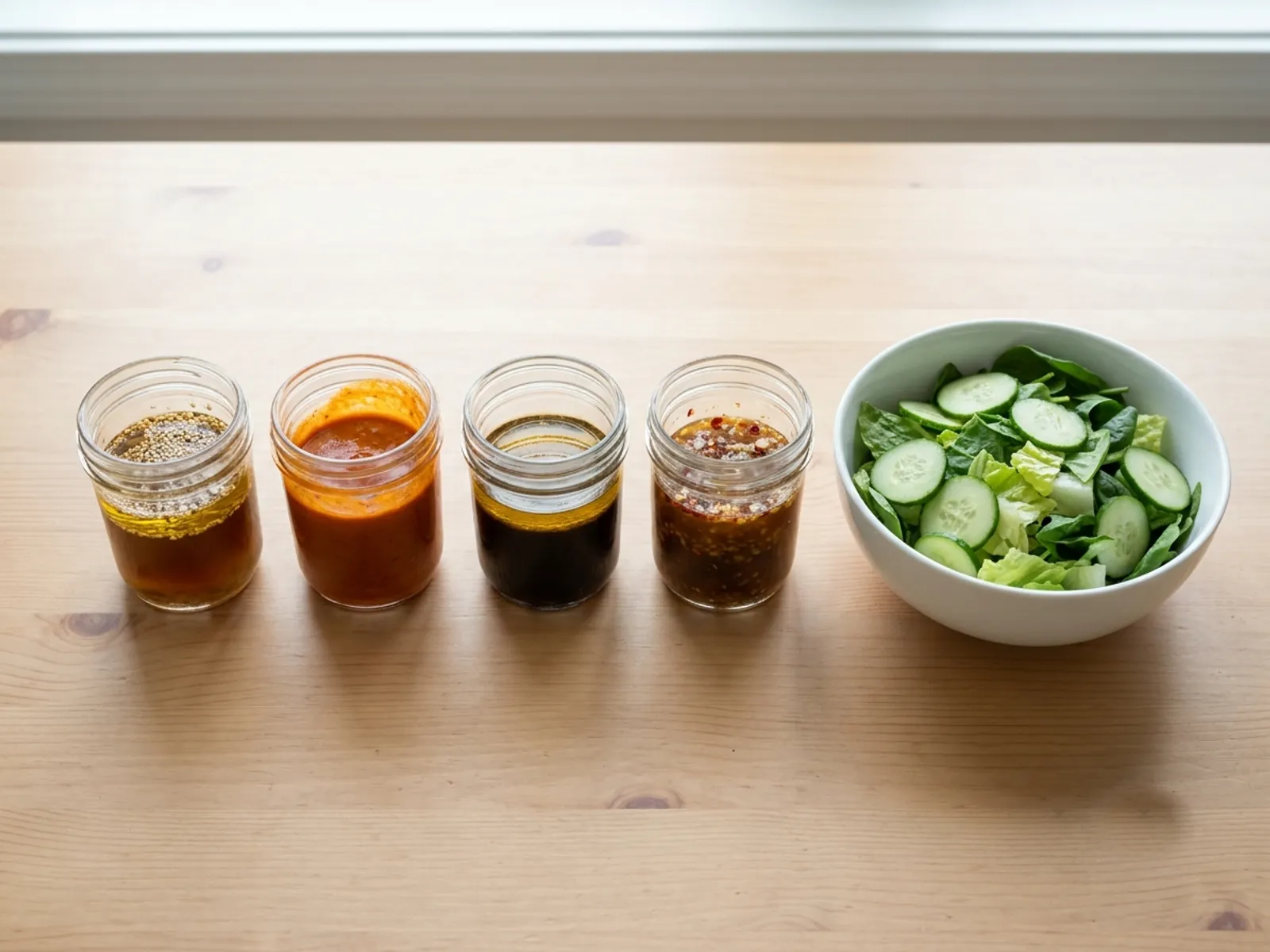
Image generated with AI to illustrate this guide.
Korean salad dressing is soy sauce, vinegar, sesame and a little sweetness, and it works just as well with olive oil as the main oil. Below are four ratios you can shake in a small jar: soy sauce, gochujang, sesame soy and a garlic and chili version, plus how much to use and how long each keeps.
The idea: olive oil next to sesame oil
The starting point is the Asian sesame dressing by Nagi Maehashi at RecipeTin Eats. Her dressing uses both toasted sesame oil and olive oil. She notes that olive oil is not a traditional Asian ingredient, but that many modern Asian restaurant recipes use it.
That pairing is the whole idea of this site: olive oil from the Mediterranean kitchen and seasonings from the Korean one, in the same jar. We took the same approach further with gochujang and gochugaru, and sized each dressing for one salad jar.
Korean salad dressing ratios at a glance
All four use extra virgin olive oil, since the dressing is never heated. Our guide on olive oil grades explains what extra virgin means and how it differs from plain olive oil.
| Dressing | Olive oil | Seasoning | Vinegar | Sweet |
|---|---|---|---|---|
| Soy sauce and olive oil | 2 tbsp | 1 tbsp soy sauce | 1 tbsp | ½ tbsp honey |
| Gochujang and olive oil | 2 tbsp | 1 tbsp gochujang | 1 tbsp | ½ tbsp honey |
| Sesame soy | 1 tbsp | 1 tbsp soy sauce, 2 tsp toasted sesame oil | 1 tbsp | 1½ tsp honey |
| Garlic and chili soy | 2 tbsp | 1 tbsp soy sauce, 1 tsp gochugaru, 1 small garlic clove | 1 tbsp | ½ tbsp honey |
One tablespoon is 15 ml and one teaspoon is 5 ml. Rice vinegar is the mildest choice, and plain white vinegar is sharper. Each dressing makes about 4 to 5 tablespoons: enough for one 24-ounce salad jar, which takes about 3 tablespoons, with a little left for the table.
1. Soy sauce and olive oil dressing
This is the base: 2 tablespoons (30 ml) olive oil, 1 tablespoon (15 ml) soy sauce, 1 tablespoon (15 ml) rice vinegar and ½ tablespoon (7 ml) honey. Shake it in a small jar until the honey dissolves, then add 1 teaspoon toasted sesame seeds.
The ratio is 2 parts oil to 1 part soy sauce to 1 part vinegar. Doubling or tripling it is easy, and with no fresh ingredients the batch keeps in the fridge. It goes on cucumber, cabbage, tomatoes and cold tofu.
2. Gochujang and olive oil dressing
Swap the soy sauce for 1 tablespoon gochujang and keep everything else the same. Gochujang is a thick fermented chili paste, so whisk the dressing with a fork or shake it hard until no lumps remain.
This dressing is thicker than the soy sauce version. It clings to hard vegetables like carrot and radish, which makes it a good match for the bottom of a mason jar salad. Gochujang brands differ in heat and sweetness, so taste before adding all the honey.
3. Sesame soy dressing
This one stays closest to the RecipeTin Eats original: 1 tablespoon soy sauce, 1 tablespoon rice vinegar, 1 tablespoon olive oil, 2 teaspoons toasted sesame oil and 1½ teaspoons honey. The original also allows 1 teaspoon of sugar instead of honey.
Toasted sesame oil is strong, and that is why the olive oil is there: it carries the dressing while the sesame oil adds the roasted flavor. Sprinkle toasted sesame seeds on the salad at the end.
4. Garlic and chili soy dressing
Start with the soy sauce dressing and add 1 teaspoon gochugaru (Korean chili flakes) and 1 small garlic clove, grated. Chopped scallion is a common addition too.
Fresh garlic and scallion change how this dressing keeps. Make it the day you need it, in a single batch, rather than storing a big jar.
How much dressing to use
RecipeTin Eats gives a simple guide: about 1 tablespoon of dressing per packed cup of shredded vegetables, and 2 teaspoons per handful of leafy greens. For a 24-ounce mason jar salad, 3 tablespoons is enough.
Start with less. You can always add more at the table, but a salad that sits in too much dressing goes soft.
How long Korean salad dressing keeps
- No fresh ingredients (dressings 1 to 3): up to 3 weeks in the fridge, the limit RecipeTin Eats gives for its sesame dressing. Hurry The Food Up uses a shorter, rough figure of 5 days for oil and vinegar dressings in a salad jar.
- Fresh garlic or scallion (dressing 4): make it the same day.
- Cold olive oil: olive oil turns cloudy and thick in the fridge. Let the jar sit at room temperature for a few minutes and shake it before pouring.
Store dressing in a clean jar with a tight lid, and keep your olive oil bottle itself somewhere cool and dark, as our guide on how to choose olive oil explains.
Where to use these dressings
These dressings work beyond salad. The soy sauce version can go over rice with a soft egg. Our avocado egg bibimbap with soy sauce uses plain soy sauce in that spot, and the dressing is a richer swap. The gochujang version works as a dip for raw cucumber and carrot sticks.
For a week of lunches, pack the dressing at the bottom of a jar and layer vegetables on top. The full order is in our guide to mason jar salad layers.
Questions
What is Korean salad dressing made of?
Korean salad dressing is usually soy sauce, vinegar, toasted sesame oil and a little sugar or honey, often with sesame seeds, garlic or gochugaru. Using olive oil as the main oil keeps the same flavors but makes the dressing milder, because toasted sesame oil is strong on its own.
Can you use olive oil in Korean salad dressing?
Yes. Olive oil is not a traditional Korean ingredient, but it mixes well with soy sauce and gochujang. Nagi Maehashi of RecipeTin Eats uses olive oil next to toasted sesame oil in her Asian sesame dressing and notes that many modern Asian restaurant recipes use olive oil.
How long does soy sauce and olive oil dressing last?
A soy sauce and olive oil dressing with no fresh ingredients keeps up to 3 weeks in the fridge, which is the limit RecipeTin Eats gives for its sesame dressing. Once you add fresh garlic or scallions, make only what you need for that day.
How much dressing do you need per salad?
Use about 1 tablespoon of dressing per packed cup of shredded vegetables, or 2 teaspoons per handful of leafy greens, which is the guide RecipeTin Eats gives. A 24-ounce mason jar salad takes about 3 tablespoons.
Why does olive oil dressing go solid in the fridge?
Olive oil turns cloudy and thick when it is cold. That is normal for olive oil. Let the jar of dressing sit at room temperature for a few minutes, then shake it well before you pour it, as RecipeTin Eats suggests.