Gim Pasta: Korean Seaweed Pasta With Olive Oil, 2 Ways
Gim pasta explained: Eric Kim's creamy seaweed pasta and the Korean soy-sesame version, plus olive oil, egg-safe and kid-friendly swaps.
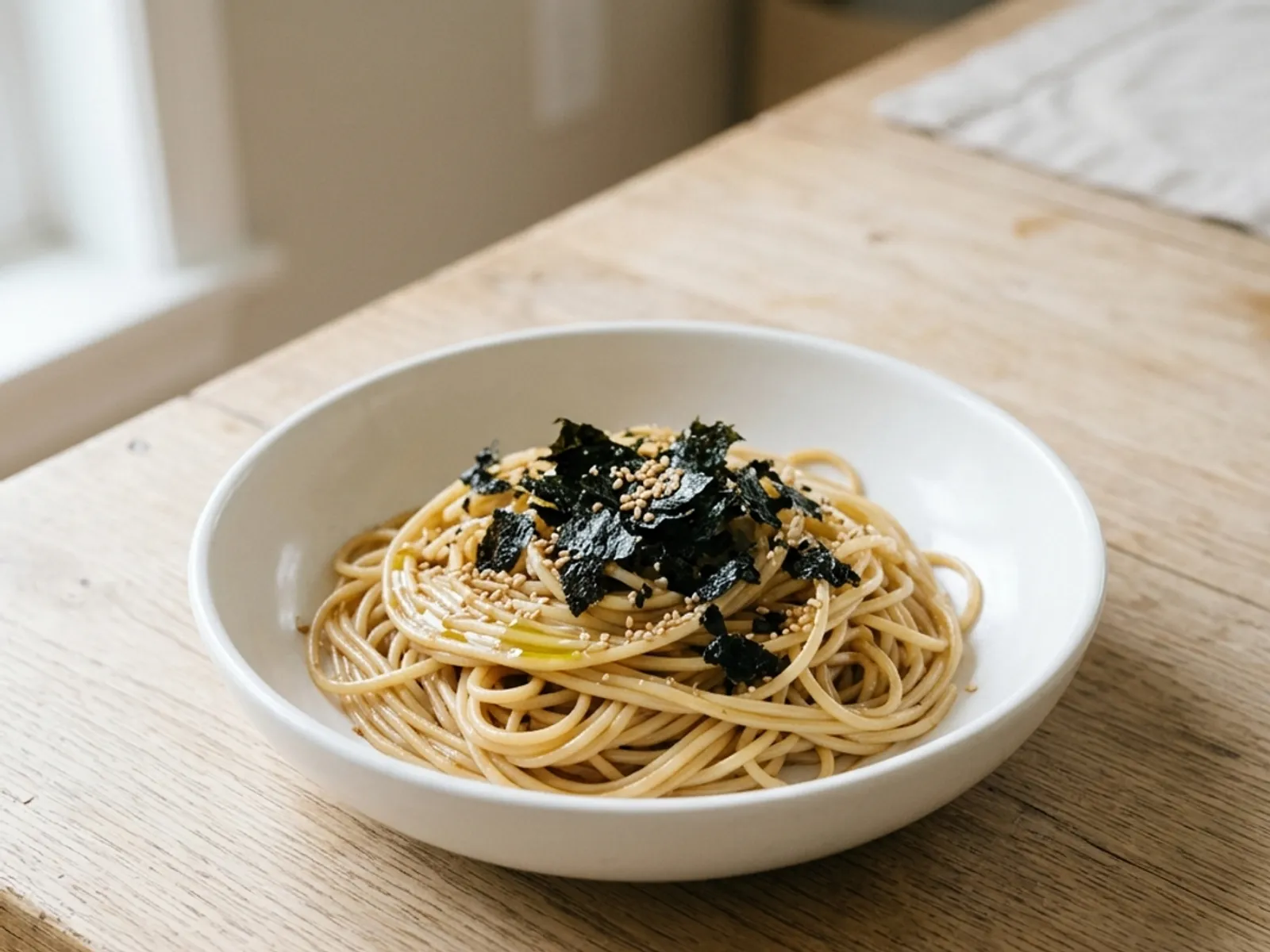
Image generated with AI to illustrate this guide.
Gim pasta is pasta tossed with crushed roasted Korean seaweed, and it comes in two main forms: a creamy bucatini from Eric Kim's cookbook and a Korean soy sauce and sesame oil toss. This guide summarizes both, then adds a version with olive oil, ways around the raw egg yolk, and a plain, chili-free setup for kids.
Note: Olive & Kimchi has not cooked these versions yet. The sources below are real recipes. The ratios in the "olive oil version" section are starting points built from them, so taste and adjust.
Where gim pasta comes from
Eric Kim, the food writer, calls his seaweed pasta "gim pasta," and it is in his cookbook Korean American (Clarkson Potter, 2022). The Washington Post recipe by Aaron Hutcherson, adapted from the book, is called Creamy Bucatini With Roasted Seaweed. The Kitchn also wrote about the recipe.
Gim is the Korean word for the seaweed also known as nori in Japanese. In Korean grocery stores it is usually sold as roasted, salted sheets, often brushed with sesame oil. In Kim's recipe that saltiness does the job that seafood does in some cream sauces.
The second form is not a single recipe. Korean home cooks also toss noodles with soy sauce, sesame oil and sugar. A Korean Instagram reel by @yeonijubang posted in October 2026 shows that seasoning on pasta with seaweed powder, ground sesame and an egg yolk. A separate Korean recipe site, 10000recipe, has a soy sauce pasta that uses 2 tablespoons soy sauce, 1 tablespoon sesame oil and 1 tablespoon sugar for one serving.
Version 1: Eric Kim's creamy bucatini (summary)
The method is short. Boil bucatini in well-salted water until it is pliable but still firm, keep some of the starchy water, then finish the pasta in a pot with the milk or cream, garlic and part of that water. Simmer until the sauce thickens and coats the noodles.
After that, stir in toasted sesame oil, season with salt, and top with black pepper and crushed seaweed. Chili flakes are optional.
The book uses heavy cream and fresh garlic. The Washington Post adaptation swaps in evaporated milk and garlic powder so the dish works from a pantry, and it serves 3 to 4 in about 15 minutes. For exact quantities, use the Washington Post page rather than a copy here.
Version 2: the Korean soy-sesame toss
This version has no cooked sauce. You mix soy sauce, sesame oil and sugar, toss it with just-boiled pasta, and add seaweed and ground sesame. The 10000recipe page uses soy sauce to sesame oil to sugar at 2 : 1 : 1, and the reel above shows about 1 : 1 : ½ with an egg yolk.
One tip from the 10000recipe page: drain the pasta without rinsing it in cold water, so the seasoning clings.
The two versions are different dishes. Version 1 is a rich, milky pasta with the seaweed as a topping. Version 2 is a lighter, salty-sweet noodle toss that is closer to Korean bibim noodles.
The olive oil version
Olive oil is not a traditional Korean ingredient, but it works next to sesame oil. We use that pairing in our Korean salad dressings with olive oil, where olive oil carries the dressing and a little sesame oil adds the roasted aroma. The same idea works here.
Starting point for one serving, about 3.5 ounces (100 g) of dry spaghetti or linguine:
- 1 tablespoon (15 ml) soy sauce
- 1½ teaspoons (7 ml) toasted sesame oil
- 1½ teaspoons (7 ml) extra virgin olive oil
- 1½ teaspoons (about 6 g) sugar
- 1 teaspoon ground toasted sesame seeds
- 1 small package of seasoned gim, crushed by hand
Mix the soy sauce, both oils and sugar first until the sugar dissolves. Toss with the hot, drained pasta, add a tablespoon of the pasta water if it looks dry, then top with the sesame seeds and gim. Add the gim last so it stays crisp.
That is the 1 : 1 : ½ ratio with half of the sesame oil swapped for olive oil. Because the oil is not heated, choose an extra virgin olive oil you like the taste of. Our guide on how to choose olive oil explains how to read the label, and the one on olive oil grades explains what extra virgin means.
Which pasta to use
Long, thin pasta like spaghetti or linguine suits this seasoning. Bucatini, the hollow noodle from Kim's recipe, is the match for the creamy version. Durum wheat pasta is the kind that stays firm in the pot, which we explain in what is durum wheat.
If you like Asian-style pasta, our spaghetti stir fry with fish sauce and aged radish kimchi pasta use the same idea, ordinary dry pasta with Korean and Southeast Asian seasonings.
Seasoned gim, plain gim and raw gim
The type of seaweed decides how much salt you add.
| Seaweed type | What it is | What to adjust |
|---|---|---|
| Seasoned gim snacks | Roasted, salted, often brushed with sesame oil | The Washington Post recipe asks for sesame-flavored snacks. Start with less soy sauce, then add |
| Plain roasted gim or nori | Roasted but not seasoned | Add a pinch of salt and an extra splash of sesame oil |
| Raw or unroasted sheets | Not toasted yet | Toast briefly in a dry pan until crisp, then crush and season |
Seasoned gim and soy sauce are both salty, and the two sources differ on salting the water. Kim's creamy version asks for generously salted water. For the soy-sesame version, salt the water lightly and taste before you add more soy sauce.
The raw yolk: pasteurized, cooked or skipped
The Korean reel tops the pasta with a raw egg yolk. The USDA Food Safety and Inspection Service advises everyone against eating raw or undercooked egg yolks, and it names infants, young children, older adults, pregnant women and people with weakened immune systems as the most vulnerable. It also says in-shell eggs that have been pasteurized may be used without cooking.
Here are your choices:
- Pasteurized in-shell eggs. The USDA says these can be used without cooking, and some grocery stores sell them. Look for the word pasteurized on the carton. Home pasteurizing is not practical.
- Use a cooked yolk. A hard-boiled yolk, grated over the top, gives the same golden color and richness without any raw egg.
- Skip the yolk. Nothing in the seasoning needs egg. Add a spoonful of olive oil and a splash of pasta water, then toss until glossy.
A cooked yolk changes the texture, because it will not melt into a sauce the way a raw yolk does. If anyone eating the dish is in a higher-risk group, ask a doctor before serving any raw egg, even a pasteurized one.
A kid-friendly setup
Two questions came up in the comments under the Korean reel: whether the dish works without chili, and whether it is fine for a small child. The answer to the first is yes. Chili is optional in Kim's recipe (gochugaru, Aleppo pepper or crushed red pepper), and the Korean soy-sesame seasoning has no chili at all.
For a mild bowl, leave out gochugaru and pepperoncino, use less soy sauce than the starting ratio, and skip the raw yolk. Crush the gim fine so it is easy to pick up with a fork, and cut long noodles shorter if needed.
Leftovers
The Washington Post version says leftovers keep in the fridge for up to 5 days. The soy-sesame version has no cream, but seaweed turns soft once it touches the noodles, so add fresh gim when you reheat or serve.
Questions
What is gim pasta?
Gim pasta is pasta finished with crushed roasted Korean seaweed (gim, also spelled kim). Eric Kim's version in his cookbook Korean American is a creamy bucatini with sesame oil, and many Korean home cooks make a soy sauce, sesame oil and sugar version instead.
Can you use nori instead of gim for gim pasta?
Yes, but season more. Gim is roasted seaweed that is usually salted and often brushed with sesame oil, while Japanese nori is often plain. With plain nori, toast it briefly, then add extra salt and sesame oil, as the Washington Post version of the recipe advises.
Is it safe to put a raw egg yolk on pasta?
The USDA advises everyone against eating raw or undercooked egg yolks, and infants, young children, older adults, pregnant women and people with weakened immune systems are the most vulnerable. If you want a yolk on top, use pasteurized in-shell eggs, a grated hard-boiled yolk, or skip the yolk.
Can you make seaweed pasta without the egg yolk?
Yes. The seasoning is soy sauce, sesame oil, sugar, ground sesame and seaweed, and none of it needs egg. Without the yolk the sauce is thinner, so add a spoonful of olive oil and a splash of the starchy pasta water and toss until the noodles look glossy.
How do you make gim pasta for kids?
Leave out the chili: skip gochugaru and pepperoncino, which are optional in the sources. Use less soy sauce at first because seasoned gim is already salty, and skip the raw yolk for young children.